High-pressure booster pumps
High-pressure booster pumps and packaged booster pump stations for mine sites, process plants, wash bays, fire water, and commercial water supply. We design, build, factory-test, and commission each station as one turnkey package, with every pump and component pressure-rated to your duty.
What a high-pressure booster pump does
A booster pump takes in water with too little pressure and raises it to the pressure the application needs, increasing pressure without starving flow. In a home, a small water pressure booster fixes low plumbing pressure so a shower or tap runs properly, or helps fill a header tank.
On a mine site or in an industrial plant, the job is bigger: delivering process water, wash-down water or fire water at a set pressure, often over long pipe runs or significant elevation, and holding steady pressure as demand changes through the day.
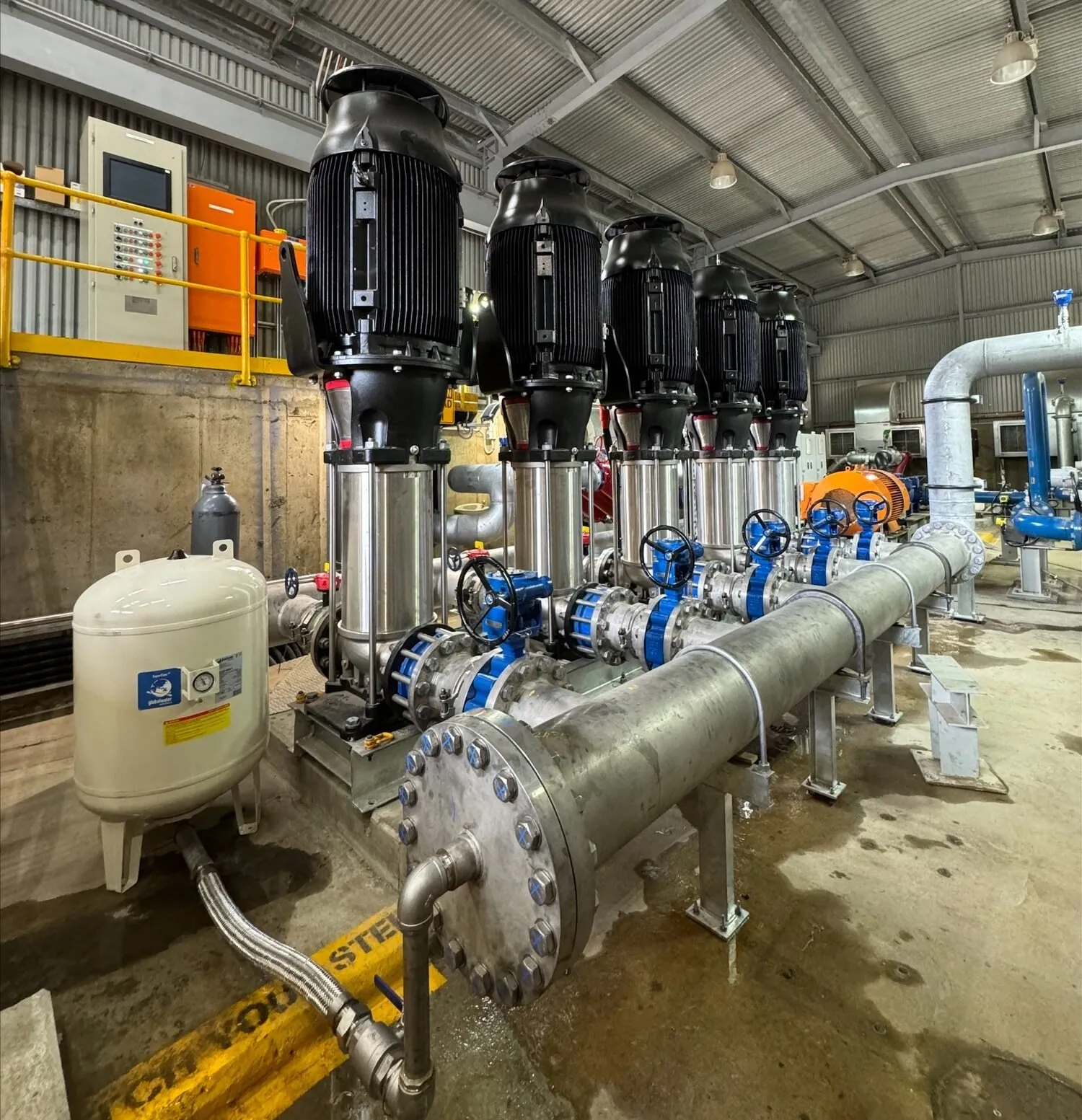
Most pressure booster pumps are centrifugal. Water enters at the inlet, the motor drives the impeller, and the water leaves the outlet at a higher pressure. Where one impeller cannot produce enough head, a multistage booster pump stacks several impellers in series, with each stage adding pressure. Vertical multistage pumps are the workhorse for high-pressure duties at moderate flow, which is why they sit at the centre of most of the industrial booster pump stations we build.
Packaged booster pump stations
A booster pump alone is rarely the whole answer. The station around it decides whether the system holds pressure steadily or hunts and hammers the line: the manifolds, isolation and check valves, suction filtration, pressure tank, instrumentation, switchboard and controls.
We design the station as one system, size the pressure tank to limit pump cycling, and protect the suction side so the pumps are never starved. We build and test stations in our workshop, then deliver them as a skid, a pump room fit-out, or a complete modular building.
Fixed speed or variable speed booster pumps
Ordinary booster pumps run at a constant speed and start and stop on a pressure switch. That suits a steady demand. When demand shifts through the day, a variable speed drive (VSD) adjusts motor speed to match it, maintaining steady outlet pressure while using less energy than a fixed-speed pump running against a throttled valve. The result is a more efficient system and better energy efficiency over the station's life.
Multi-pump stations add duty, assist and standby control. Pumps stage on and off to follow demand and share running hours, and a standby pump takes over if a duty pump faults, so supply continues without anyone on site having to intervene.
Factory Acceptance Testing before it reaches site
We complete a Factory Acceptance Test (FAT) on the entire station in our workshop before installation. The pumps, pipework, valves and controls arrive already proven, so commissioning on site starts from a known baseline instead of debugging the system in place on an operating site. The same process applies across our full range of mining pumps.
Where pressure boosters and booster pumps are used
We design, manufacture and install pressure booster pumps tailored to the application, from a modest pressure increase on a small system through to a high-powered boost for long-distance water transfer. They are versatile machines that suit various applications across residential, commercial and industrial settings. On the industrial side, typical duties include:
Mine site water reticulation and long-distance water transfer
Process water supply for industrial plants, coal preparation plants and CHPPs
Vehicle wash bays and high-pressure wash-down systems
Fire protection and hydrant booster systems
Hydraulic systems and booster pumping stations
Water supply for dust suppression, irrigation and commercial developments
Our booster projects span mining, renewable energy, industrial development, and commercial development. For fire water duties, see our fire pump systems, and for water supply to dust cannons, see our dust suppression cannons.
How we size a booster pump to the duty
Selecting the right booster pump starts with the duty, not a catalogue. We work through:
Required flow
The litres per second the system must deliver at peak demand and at minimum demand.
Total head
The static lift, plus friction loss through the pipework at that flow, plus the residual pressure needed at the outlet.
Inlet pressure
A booster pump needs adequate suction-side pressure to avoid cavitation, so we check suction conditions as carefully as discharge.
Water quality and materials
Mine, process, and recycled water can carry solids and be corrosive, so material compatibility determines service life. Where corrosion resistance is critical, we can specify 316 stainless steel or super duplex.
Operating pattern
Continuous or intermittent operation, and how demand changes, which sets the control method and the number of pumps.
From there, we select the pump family, the number of duty and standby pumps, the control method and the materials, then size the pressure vessel and suction arrangement. Each station is pressure-rated for its duty and fully automated.
Features and benefits
Features
- Vertical multistage and skid-mounted configurations
- Fixed speed or VSD control with duty, assist and standby logic
- Pumps and parts pressure rated to the duty
- Pressure tanks, suction filtration and instrumentation
- Complete electrical and mechanical scope, including switchboards
- 316 stainless steel and super duplex material options
- Factory Acceptance Testing before installation
Benefits
- Steady pressure as demand changes
- Lower energy use with variable speed control
- Reduced installation and commissioning time on site
- One contractor for the mechanical and electrical scope
- A complete turnkey solution from design to commissioning
Pressure Booster Pump Station, QLD mine site
| Item | Detail |
|---|---|
| Pumps | 5 x CRN185 200 kW vertical multistage |
| Duty | 140 L/s at 220 m head |
| Pressure vessel | 850 L pressure tank and gauges |
| Suction filtration | 4 x filters on pump suction side |
| Electrical | Switchboard and electrical instrumentation |
| Contract value | $2.5 million |
Delivered projects
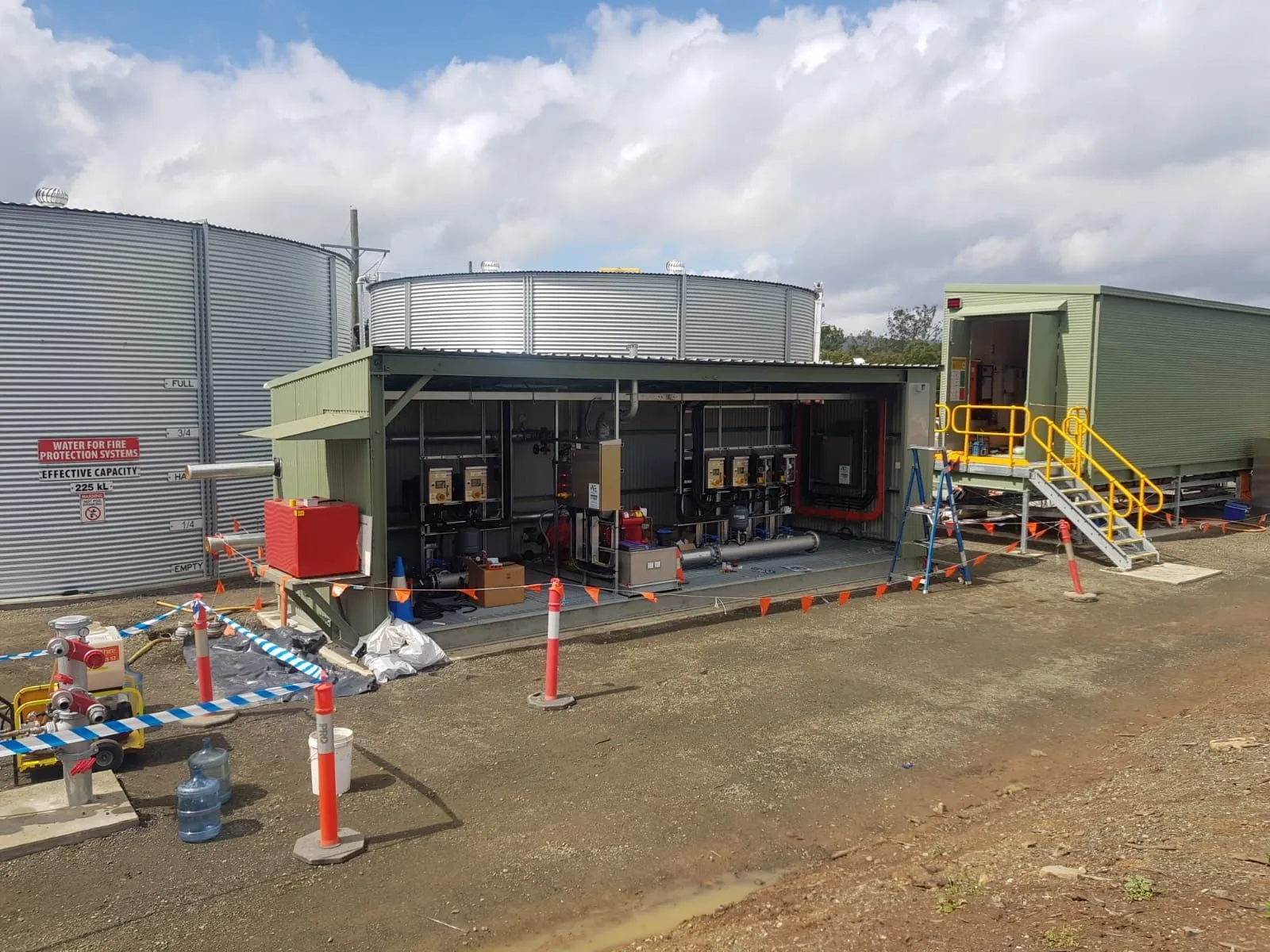
Wambo United Modular Pump Station
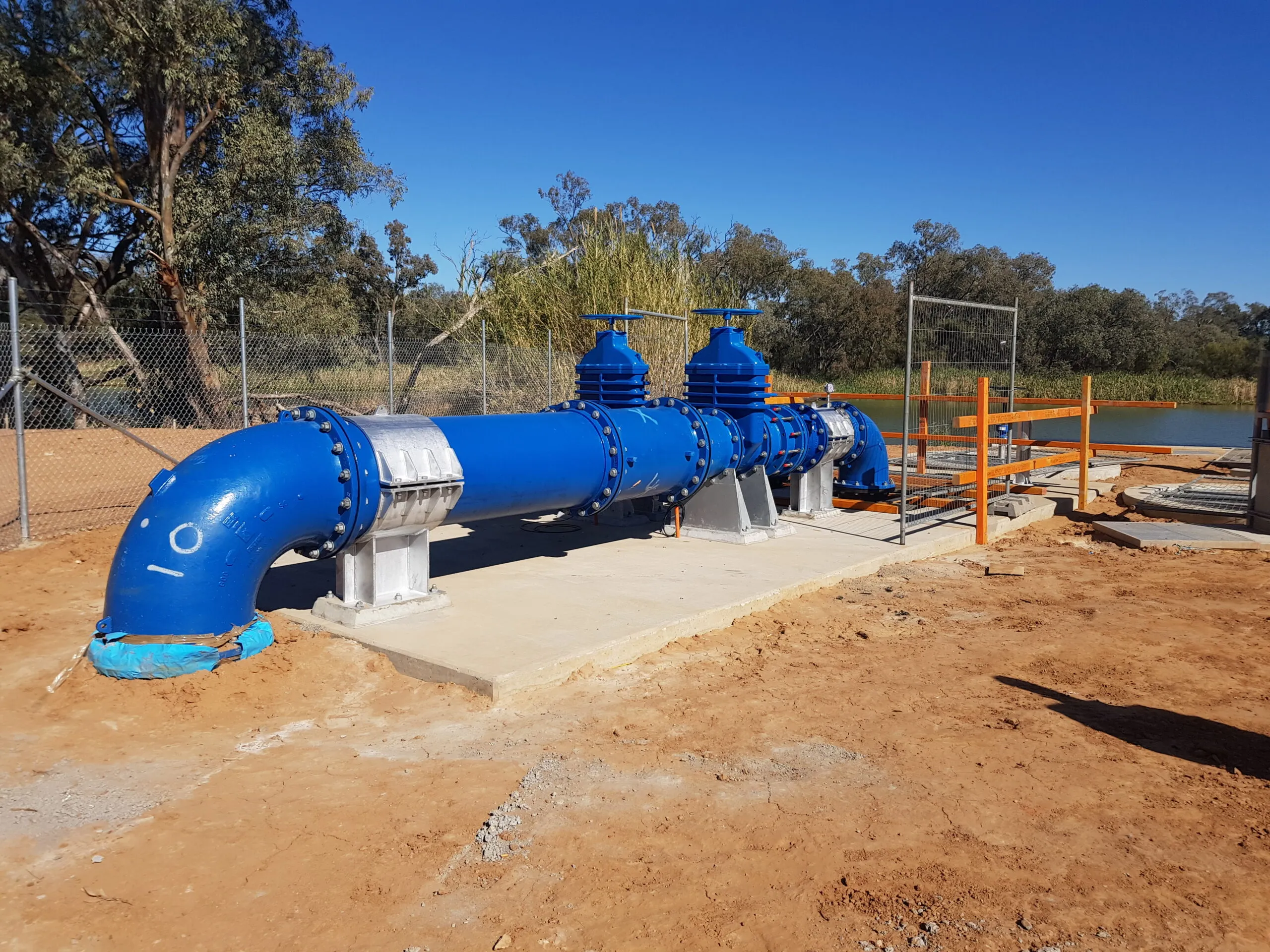
Midwest Water Transfer Pump Station
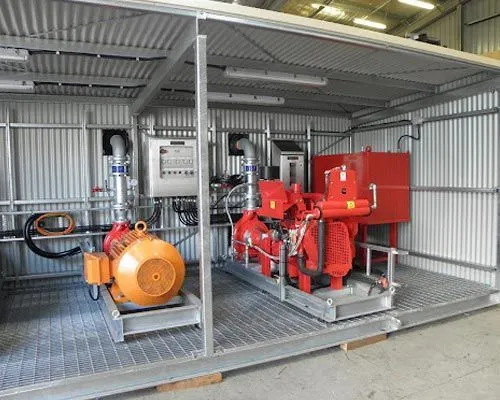
Moolarben UG Coal Mine Modular Fire Pump Station Project
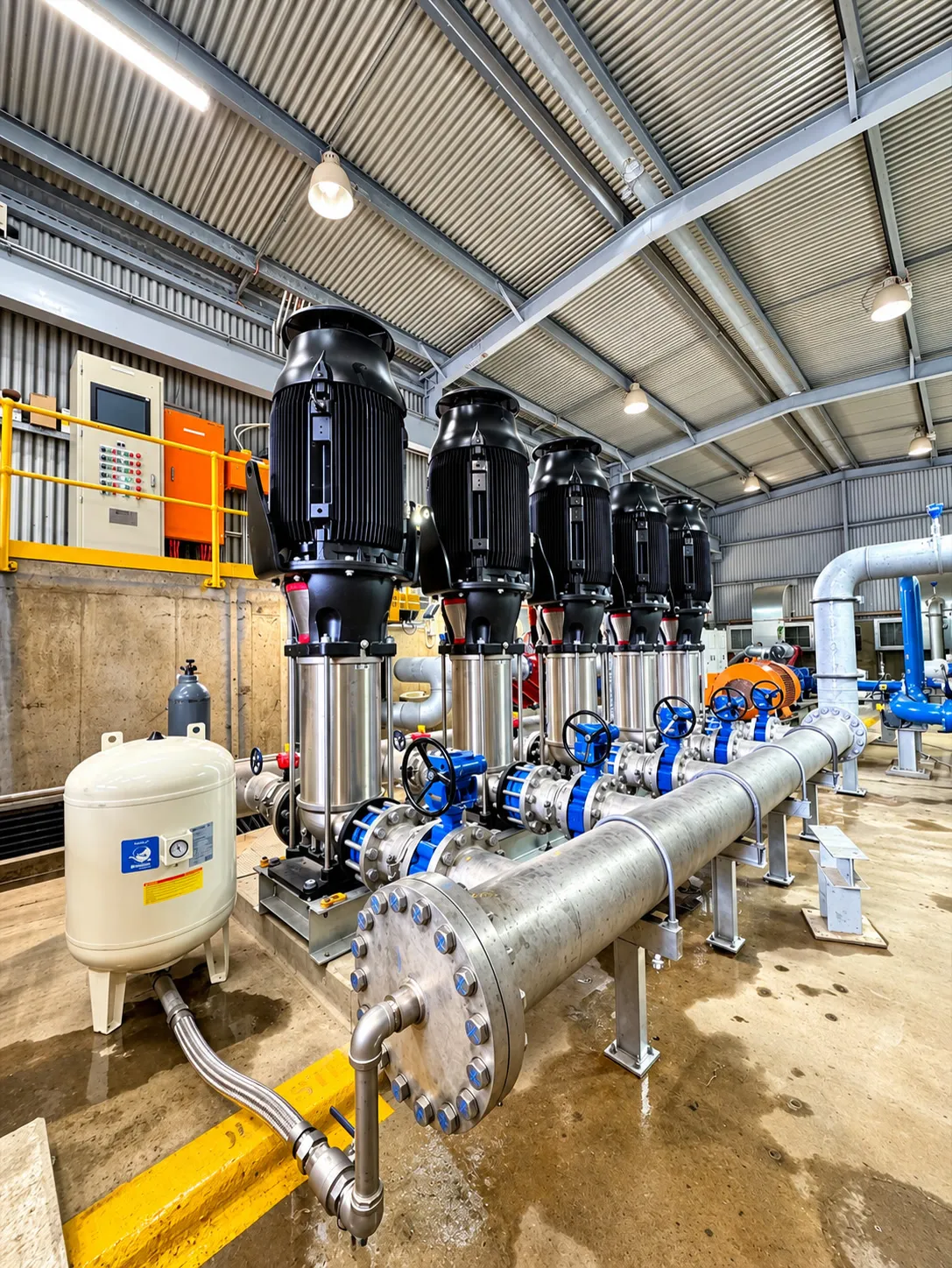
Pressure Booster Pump Station
Frequently asked questions
What is a high pressure booster pump?
A high-pressure booster pump raises water pressure from what the supply delivers to what the application needs. Industrial booster pumps are usually multistage centrifugal pumps that can produce high head at moderate flow, and they're often built into a packaged station with controls, a pressure tank, and suction filtration.
How is an industrial water pressure booster pump different from a residential one?
A residential water pressure booster pump is a single small unit that fixes low water pressure at taps and showers, delivered through domestic plumbing. An industrial booster pump station is engineered to a duty point measured in litres per second and metres of head, with multiple pumps, duty and standby control, pressure-rated parts and a full electrical scope.
Can you replace a booster station inside an existing pump room?
Yes. On a QLD mine site we designed, supplied and installed a replacement high-pressure booster pump station, modifying the existing pump room to accommodate the larger pump set and planning the installation around an operating site.
Are booster pump stations tested before delivery?
Yes. We complete a Factory Acceptance Test on the entire system in our workshop, so the pumps, pipework, valves and controls arrive already proven.
Do you supply the electrical scope as well as the pumps?
Yes. Our booster packages are a complete turnkey solution, including all electrical and mechanical requirements, from the switchboard and instrumentation through to the interconnecting pipework and valves.
Talk to us about high-pressure booster pumps.
Design, supply, install and commissioning delivered as one turnkey package, built to Australian and International Standards. Send us the duty, the site and the timeline, and we'll come back with a proposal.
- Tell us about the job
The site, the application and anything you already have, such as drawings, a protocol or a duty point.
- Our engineering team responds
A member of our engineering team will respond within 24 hours.
- Proposal and concept
A free proposal and concept design, with no obligation.