
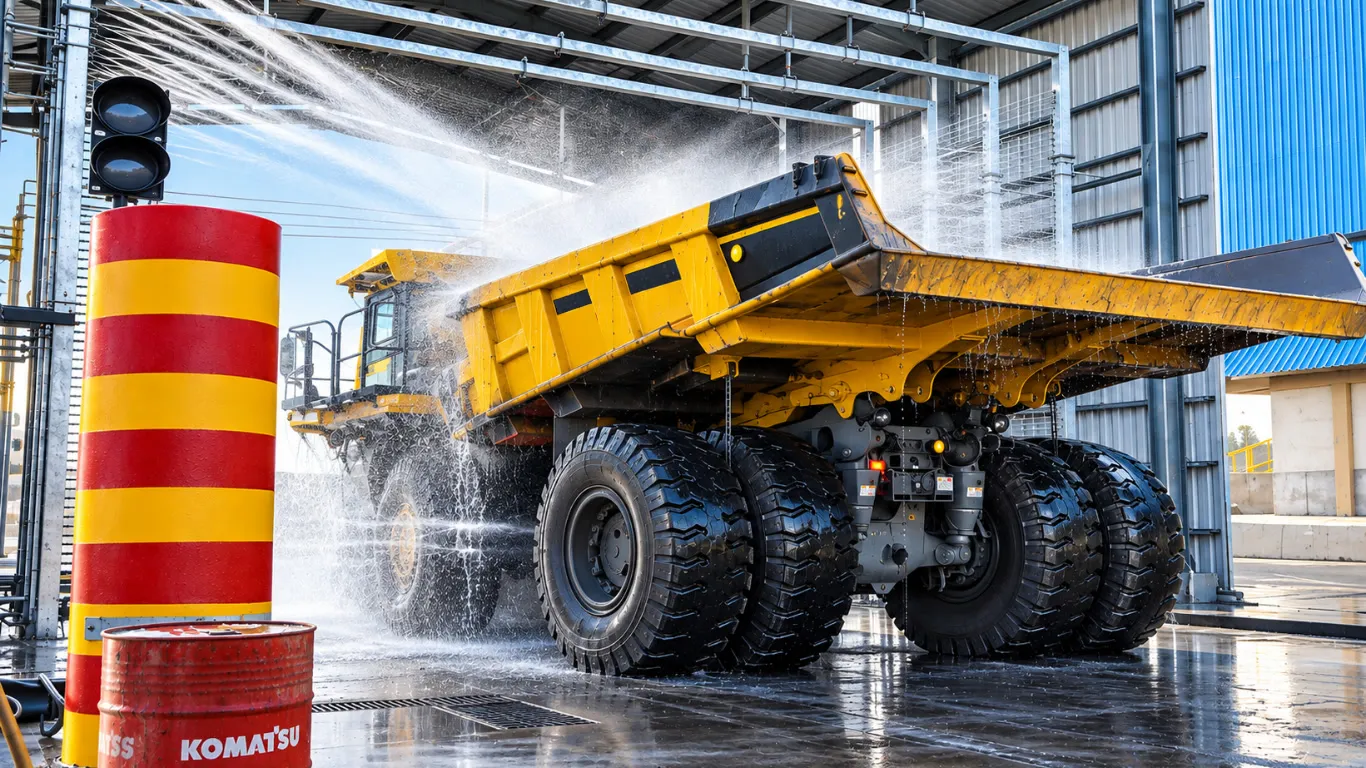
Haul truck driving through a covered truck wash bay under high-pressure spray
Vehicle Wash Systems

HV truck wash equipment

Plenty of truck wash equipment suppliers can sell you a machine. We'd rather be your partner. From the first conversation, we work alongside you to engineer, supply, install and commission the whole wash bay, so the equipment, water recycling and site layout work together from day one.

We’re an Australian, family-owned business, and as the exclusive Australian MobyDick partner through Frutiger Company AG, we combine proven wash technology with our own design and project delivery. Our systems are in use on mining and plant hire sites, and we stay involved long after commissioning.

MobyDick demucking: washing a 240-tonne dump truck

Whether you’re washing haul trucks, road trucks or plant, we’ll build the solution around your fleet, your site and the water you have to work with.

Sizing

How to size a truck wash system

The right truck wash system keeps up with your operation, handles what comes off your vehicles and suits your site. Five things shape the design.

  • Fleet size

    How many vehicles need washing, and how often

  • Vehicle type

    Dimensions, wheels or tracks, and underbody clearance

  • Soiling grade

    Light dust, moderate mud or heavy, sticky clay

  • Throughput

    How many vehicles you need to wash per hour at your busiest times, not just on average

  • Site constraints

    Space, water supply, drainage and discharge requirements

Here's how that works in practice. Take a quarry sending up to 150 moderately soiled trucks through a wash point each day, over a 10-hour operating day. That's an average of 15 trucks an hour, and traffic is rarely even, with queues building at shift changes. As an indicative guide, a single truck wash line handles around 10 moderately soiled vehicles an hour, so one line would struggle to keep up. Two lines, or a higher-capacity configuration, would stop the wash from becoming a bottleneck.

Soiling changes the answer again. Heavier soiling can mean longer wash times, which brings throughput down, so we size for the mud your trucks actually carry, not an average.

Water is part of the sizing too. Where supply is limited or discharge requirements are strict, recycling can be built in from the outset. Our water treatment solutions can help you plan for it.

Tell us about your fleet, soiling and site, and we'll work through the sizing with you, then confirm the configuration against the manufacturer's data.

Our Systems

Truck wash systems we design and install

No two sites wash trucks the same way. From commercial truck wash equipment for a busy depot to heavy-duty systems for a mine, the right choice depends on your vehicles, how heavily they're soiled and how many you need to wash each day. The three areas below often work together, so one site might need a purpose-built bay, a wheel and chassis wash for vehicles leaving site, and a demucking system for heavy build-up. We'll work through your fleet, soiling and site with you, then design the system and the water recycling around it. If your wash point needs to move as your site changes, tell us early and we'll confirm which options can be relocated.

Engineered wash bays

When you need automated truck wash equipment, we engineer a full wash bay around your fleet and site. Our basic supply is a 15 m long by 10 m wide bay with spray and rinse arches, an undercarriage and chassis wash, a recycling tank, blast walls and personnel access platforms, run from a SCADA or PLC control panel with remote operation and monitoring. Prefer hands-on control? A wash rack with hose reels, cannons or pressure washers works too. We design the wash bay equipment together with the layout, drainage, roofing and civil works, so vehicles move through easily and wash water is collected and managed.
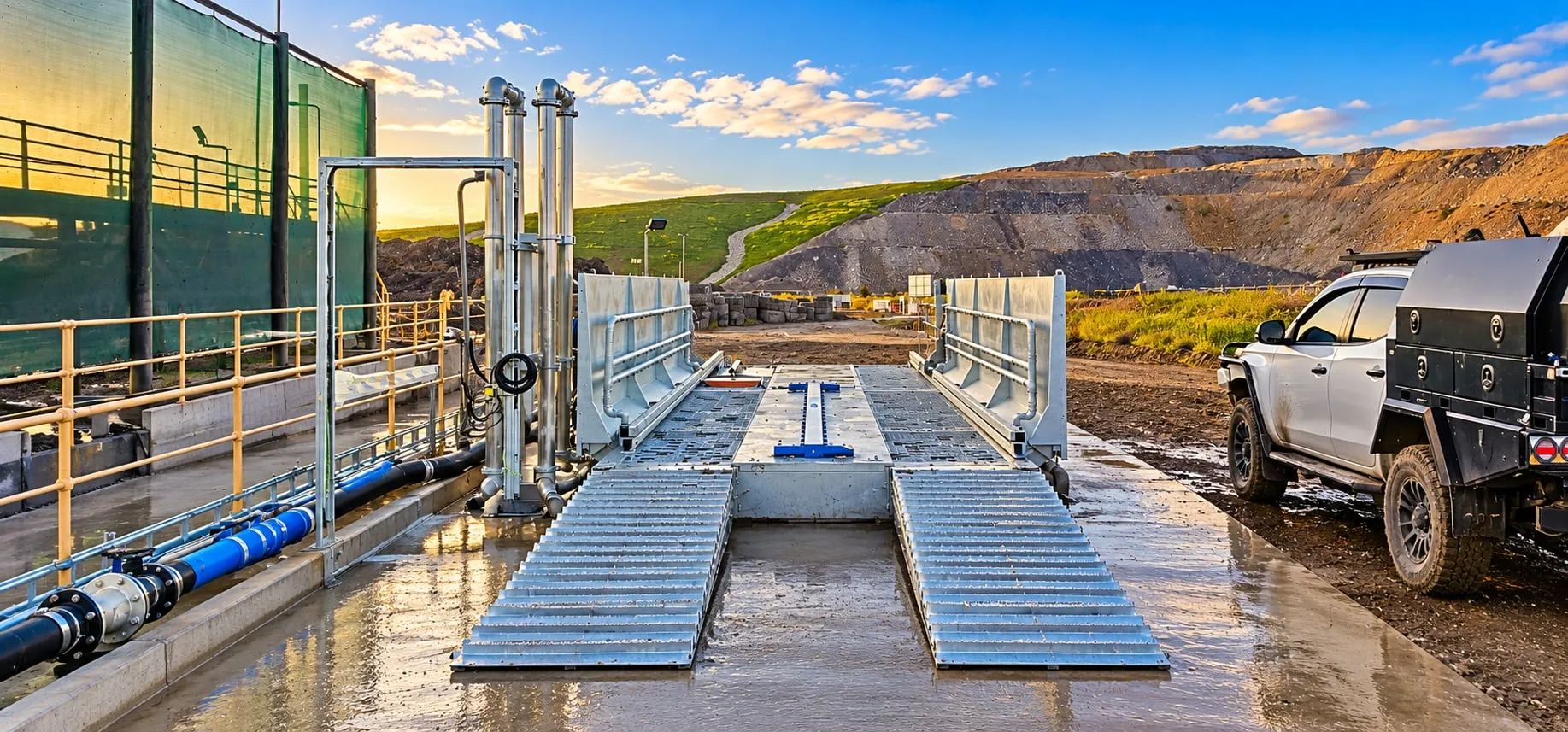
Wheel and chassis wash

Mud and debris build up around wheels, chassis and underbody components, including sensors and other equipment, and over time they can interfere with how those parts work. A wheel and chassis wash cleans these areas as trucks drive through, which helps keep dirt on site and looks after your vehicles. We'll match the system to the trucks you run and how heavily they're soiled. For wheel wash on its own, see our wheel wash and undercarriage systems.

Undercarriage wash and demucking

When heavy mud builds up on mining and earthmoving machinery, our standard demucking system is the MobyDick ONE. Trucks, loaders and tracked machines drive over a galvanised platform where modular nozzle bars and angled bottom nozzles wash wheels, tracks and mudguards. It comes in five lengths, from 3.6 m to 20 m, with axle load ratings from 15 t up to 50 t and a choice of nozzle arrangements. Recycling tanks range from manual mud removal with wheel loaders or excavators to fully automatic scraper conveyors, so the system suits how your site handles mud.

Biosecurity washdown obligations

Requirements differ between sites, landholders and regions, so it helps to start with what applies to you, whether that's a site biosecurity plan, a client or landholder requirement or guidance from the relevant authority. From there, we'll look at the vehicles involved, where they're travelling and what they pick up, then help you explore the wash technology and water management that suit your procedures.

In practice, this is usually a two-step approach: remove the soil and plant material first, then disinfect where it's needed. Our weed seed and biosecurity wash systems focus on removing soil, weed seeds and plant material, and our vehicle disinfection systems cover disinfection. A truck wash bay can handle the physical removal step, with wash water collected and managed as part of the design.

Investment

What a truck wash system costs and what it returns

As tempting as it is to set a standard price for a vehicle wash system, every solution varies from site to site and customer to customer. It comes down to what you're washing, how many vehicles need to pass through the system, how much dirt and material needs to be removed, and whether your site can support the wash system needed to achieve the results you want.

For us, it starts with understanding how your operation works. We're not here to simply sell you a product or offer a system that can't keep up with your fleet. We see it as an investment in your operation, and we want to make sure it's built to support you for the long term. We take the time to understand what you genuinely need and how your site operates, then work with you to develop a cost-effective, reliable solution that delivers when it matters most.

The return isn't just about the initial cost. The right system can help your team manage cleaning more efficiently, use water better, and keep vehicles moving through the wash point as your operation demands. Getting the design right from the start means considering what you need today and how the system will perform over time.

Features and benefits

Features

  • High-volume spray arches
  • Vehicle rinse arch
  • High-volume undercarriage and chassis wash
  • Recycling tank
  • Blast walls
  • Personnel access platforms
  • Control panel with SCADA, PLC, remote operation and monitoring

Benefits

  • Vehicles cleaned without holding up the operation
  • Wash water reused in a closed loop
  • Less manual hosing on wet pads
  • One team from design through to commissioning

Frequently asked questions

How do I size a truck wash system for my fleet?

The right system depends on the vehicles you're washing, how many need to pass through each day, the level of soiling and the time available for washing. Your site's water supply, drainage and environmental requirements also matter. That's where we come in. We'll work with you to determine a system configuration suited to your operation.

What will my water authority accept as discharge?

Discharge requirements vary by site location, where the water is going and the conditions set by your local authority. Depending on what's in your wash water, you may need an oil-water separator or additional treatment before you can discharge it. If you're unsure where to start, we can work with you to understand your site's water management requirements and help you consider the options that may suit your application.

Do I need a roof over the wash bay?

Not necessarily. It depends on your wash system, the vehicles you're cleaning and the conditions at your site. An open wash area may suit some applications, but a covered wash bay may be worth investing in if your operation needs weather protection or containment. Either way, our engineers will work with you to understand your needs and help determine what makes the most sense for your application.

How much water does a truck wash use, and how much can be recycled?

There's no one-size-fits-all answer. Water use varies with the wash system, the vehicles being cleaned and how much dirt and debris needs to be removed. Recycling can reduce the amount of fresh water your site needs, but the level of reuse depends on the treatment process and your water-quality requirements. For sites where water is limited or hard to secure, consider recycling early in the design process.

Does it need three-phase power or compressed air?

It depends on the system and how many pumps it has. The MobyDick ONE, for example, draws 5.5 kW per pump. We confirm the electrical supply you need, including three-phase, and any compressed air, during design.

What's the difference between a wheel and undercarriage wash, a demucking system and a manual wash bay?

It comes down to what you're washing and how much material you need to remove. Wheel and undercarriage washes help remove light dirt and debris from wheels and underbody areas as vehicles pass through the system. Demucking systems are suited to removing heavier mud build-up on mining and earthmoving machinery, where a more intensive cleaning process may be needed. Manual wash bays give your team more control over the cleaning process, allowing them to target specific areas with equipment such as hoses and pressure washers. If you're not sure, we can help you work through the differences and find an option, fully automated or manual, that suits your site requirements.

Talk To Us

Talk to us about HV truck wash equipment.

Design, supply, install and commissioning delivered as one turnkey package, built to Australian and International Standards. Send us the duty, the site and the timeline, and we'll come back with a proposal.

Request a quote

Your details stay with AEG and are never shared.

  1. Tell us about the job

    The site, the application and anything you already have, such as drawings, a protocol or a duty point.

  2. Our engineering team responds

    A member of our engineering team will respond within 24 hours.

  3. Proposal and concept

    A free proposal and concept design, with no obligation.

Prefer to talk? 1800 092 210