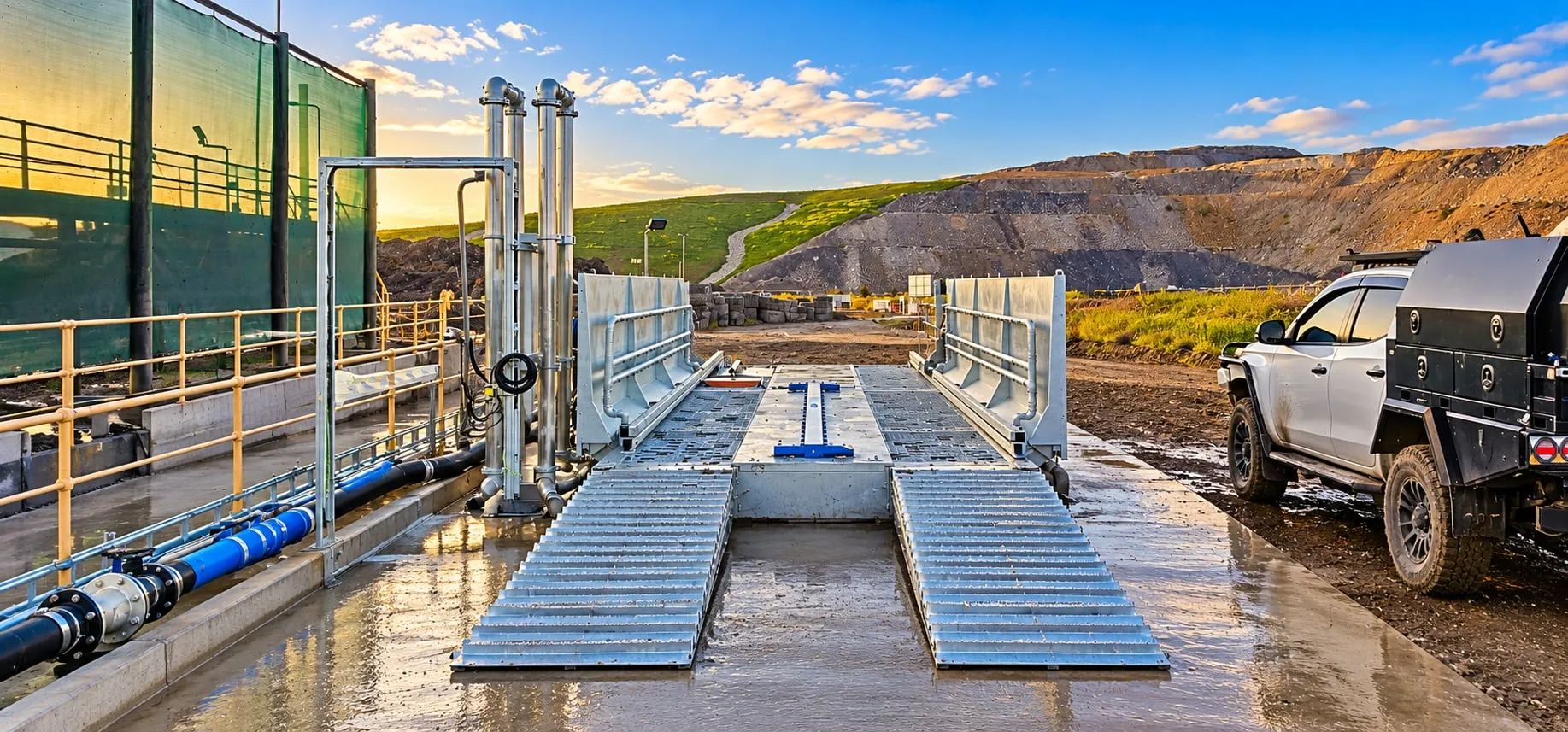
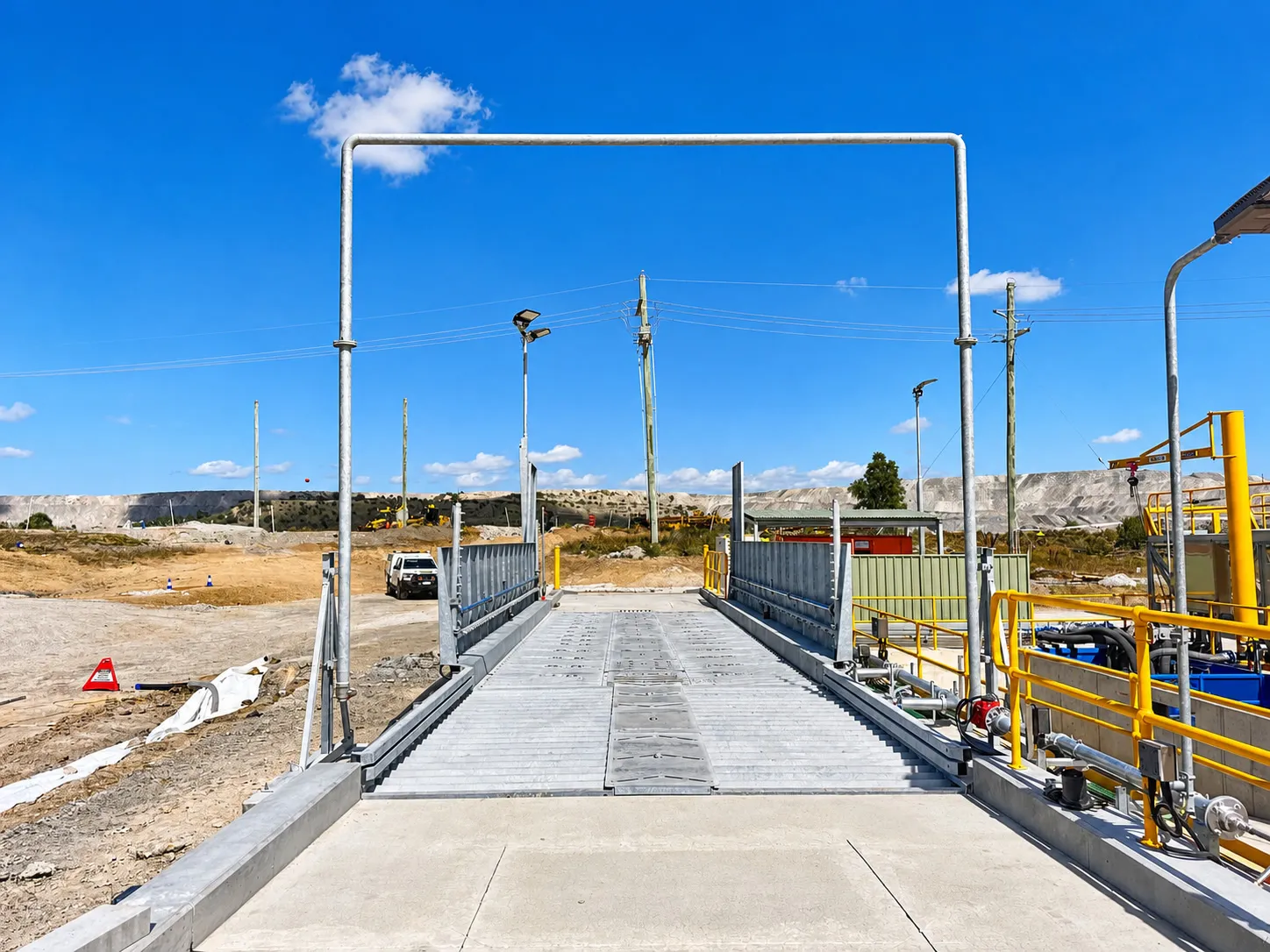
Drive-through vehicle wash bay with an overhead spray gantry over a concrete wash pad
Vehicle Wash Systems

Vehicle wash bay design & construction

A well-designed heavy vehicle wash bay does more than hold a wash system. It has to suit your fleet, handle the mud and water that come off it, and work within what your site and local authority require. That's why our wash bay design looks at the whole bay at once: the civil design, the wash equipment, water recycling and treatment, and the pathway to approvals.

We’re one team across all of it, so you’re not coordinating separate designers, builders and equipment suppliers. We work with mine sites, quarries, civil contractors, depots, fleet operators and councils to plan a bay that fits how they operate, and we stay involved through installation and commissioning.

Wash bay in operation
Components

What a well-designed wash bay includes

A well-designed wash bay is more than a pad and a pump. It's a set of core components that work together, so your team gets a functional wash bay that copes with your fleet and your site. For heavy vehicle wash bay design, here's what we plan for.

  • Graded pad and bunding

    A sloped, hard surface that holds wash water in and directs it to the collection point

  • Collection channel and silt trap

    Gathers runoff and catches the coarse mud first

  • Settling

    Gives fine solids time to drop out before the water moves on

  • Oil-water separation

    Removes oils and grease picked up from the vehicles

  • Recycling or discharge

    Reuses the water in the wash, or sends it on where your site's conditions allow

  • Treatment, where required

    Further treatment before reuse or discharge, depending on your site and local authority

  • Roof or stormwater diversion

    Keeps rain and clean stormwater from overloading the system

  • Services outside the spray zone

    Pumps, power and controls positioned clear of the spray

  • The wash equipment

    Chosen for your fleet and designed in from the start

Each part affects the others, which is why we plan them together with you. Tell us about your fleet and site, and we'll help you shape a bay that works.

Layout

Bay layout by vehicle class

The right layout depends on the vehicles you run and how they move through the bay. Good truck wash bay design starts with vehicle size, turning paths and how many arrive at once.

  • Exit wheel wash bays

    Exit wheel wash bays sit at the gate, so vehicles need a straight approach and room to queue without blocking the road. See our truck wheel wash systems.

  • Demucking bays

    Demucking bays suit heavier mud on trucks and tracked plant. Allow space for vehicles to line up, a drip zone beyond the platform so water drains before they drive on, and a clear turning path to the workshop or exit. In a heavy equipment wash bay, tracked machines also need a platform they can drive onto safely. See our undercarriage wash and demucking systems.

  • Gantry bays

    Gantry bays, where the equipment moves over a parked vehicle, need room around the vehicle for the gantry to travel, plus space to position longer vehicles.

In every layout, keep pedestrians out of the spray zone with a safe walkway around the bay. For the wash equipment itself, see our truck wash equipment.

Manual Washing

Wash racks and undercarriage access

Where you want hands-on control, or a manual option alongside automated demucking, we supply wash racks and ramps. A wash rack is a grated platform that vehicles drive onto, so wash water and mud drain through to the collection point while your team washes with hoses, cannons or pressure washers. A ramp raises the vehicle, so your team can walk underneath and reach the chassis and running gear directly. Either can suit a smaller fleet on its own, or sit beside a demucking system for spot cleaning. We design them into the bay, with drainage, safe access and room to work around the vehicle.

Compare

Permanent or portable wash bay

The choice comes down to how long you'll be on site, what you can build and how heavy your vehicles are. Both can be designed around your fleet, so it's worth deciding early.

  • Fixed sites

    Permanent wash bays

    Permanent wash bays are built on a designed concrete slab, with buried or above-ground tanks and settling basins. They suit fixed installations and heavy axle loads, such as a mine, a quarry or a large industrial wash bay that will run for years. Because the civil design is done up front, the bay can be sized and laid out around your fleet and the way water moves through the site.

  • Temporary sites

    Portable wash bay

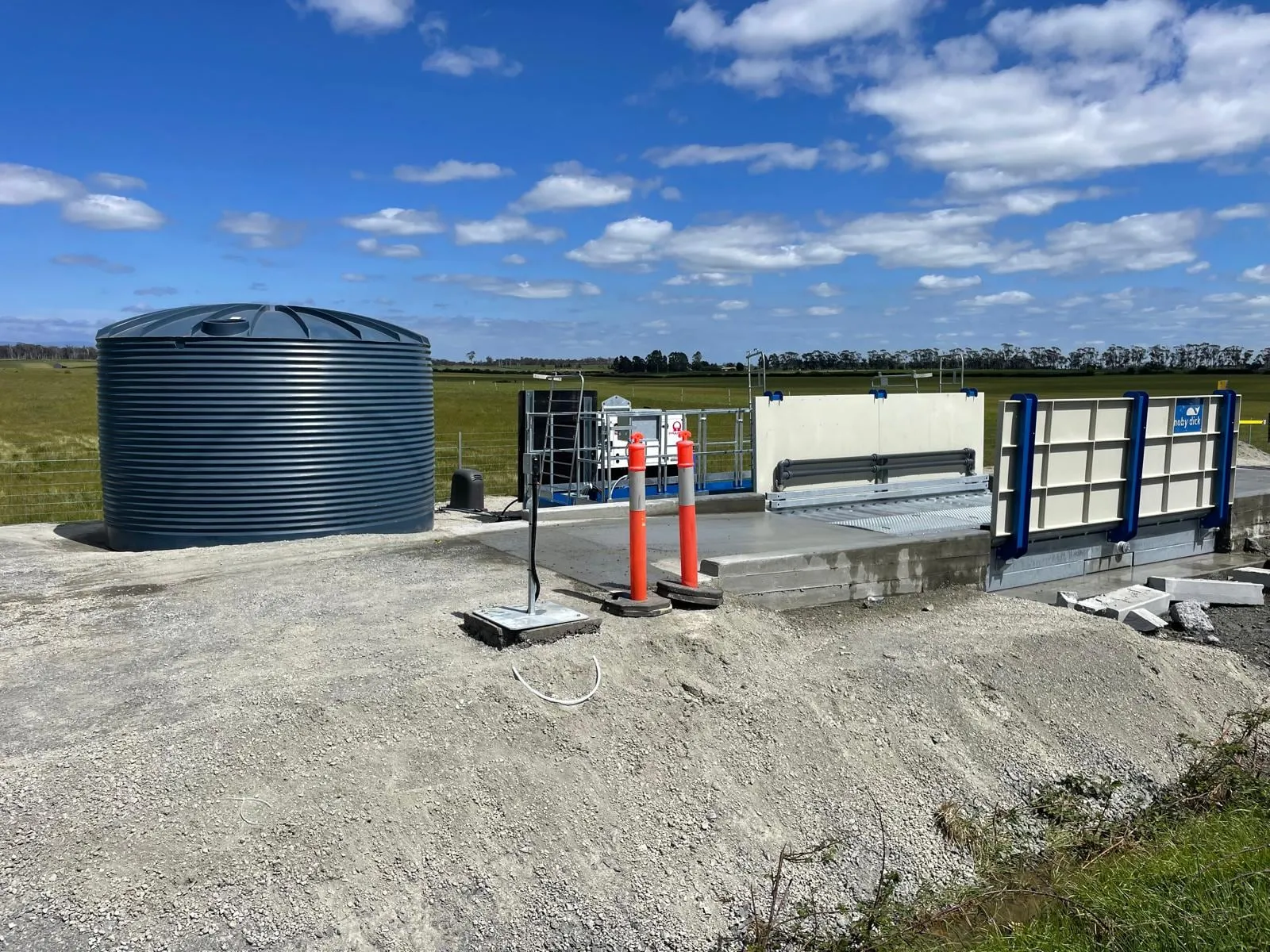
    A portable wash bay uses MobyDick units on entry and exit ramps with above-ground recycling tanks, so civil works are reduced or removed. These modular systems suit temporary sites, leased sites and projects that need rapid deployment, and they can be moved between sites when the job changes.

Wash bayPermanent wash bayPortable wash bay
FoundationDesigned concrete slabEntry and exit ramps, with civil works reduced or removed
TanksBuried or above ground, plus settling basinsAbove-ground recycling tank
Axle loadsHeavy loads, up to 50 t with the MobyDick ONEUp to 15 t on MobyDick KIT Flex portable units
Site tenureLong-term, fixed installationsTemporary, leased or short-term sites
DeploymentPlanned and built with the civil worksQuicker to deploy
RelocationPossible, with planning around site conditionsDesigned to be moved
Best forMines, quarries and large depotsProject-length sites and rapid deployment

Either way, you still need a plan for wash water. Collection, settling and recycling are part of the design, whether the bay is permanent or portable.

Not sure which suits? Tell us how long you'll be on site, what you're allowed to build and the heaviest axle load you run, and we'll help you decide.

Construction

Civil works, water treatment and services

Slab, falls, drainage and settling

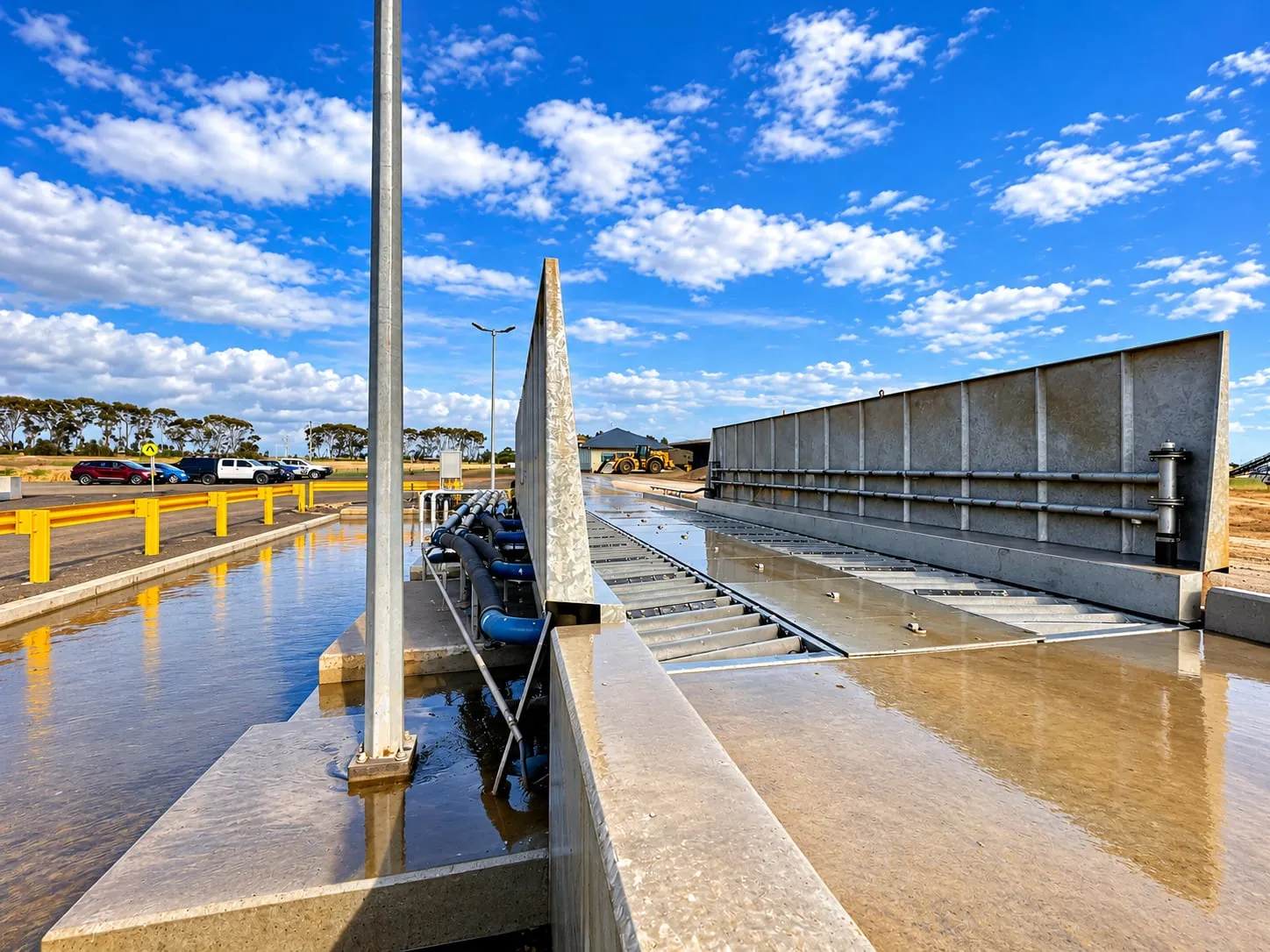
Good civil works start with the pad. Depending on your site and vehicles, that may be a concrete slab, but it doesn't have to be. What matters is that it's graded, so wash water runs to the collection point instead of pooling. The fall varies from site to site, so we set it to suit your ground, vehicles and drainage. Bunding or a perimeter hump keeps water inside the bay, and a silt trap sits ahead of the oil-water separator to catch coarse material and suspended solids before they reach it. Requirements vary by authority and site, so check what applies to you early. We plan the pad, falls, drainage and settling together, so the bay works as one system.
Oil-water separators and wash water treatment

Wash water can't simply run off site. Heavy vehicles wash off hydrocarbons and suspended solids, and in some cases heavy metals, so the water usually needs separating and treating before it's reused or discharged. What you may discharge, and whether you need a trade waste permit, depends on your local authority.

Common oil-water separators include coalescing plate, vertical gravity and hydrocyclone types, and the right one depends on your flow rate and how much oil your vehicles carry. For heavy oil loads, a triple interceptor pit can be added ahead of the system.

Where water is reused or discharged, tertiary treatment adds further stages. Our containerised wash bay system, for example, combines a coalescing plate separator, media filtration, oil adsorbent granules and chlorine dosing. Sizing starts with the volume of water your wash uses and the conditions your authority sets, so we plan treatment alongside the rest of the bay, not after it. Our water treatment plants can be matched to your wash bay.

Water recycling and wash bay pumps

A closed-loop wash recycles its water, so fresh water is only needed for top-up. At a biosecurity vehicle wash in Tasmania, two MobyDick 400B systems achieved a measured 95% water reuse rate. How much you can reuse depends on your site conditions, how heavily soiled your vehicles are and the treatment in place, so we design recycling in from the start.

Pump selection matters as much as the tanks. Wash bay pumps move water from the recycling tank to the nozzles, and the right pump depends on the flow and pressure your system needs and how much fine solid material is in the water. In our MobyDick systems, submersible MobyPump units return water from the pump chamber for further spraying. We choose pumps alongside the tank size, settling and treatment, so the recycling circuit runs reliably. For pumps beyond the wash bay, see our mining pumps, and for the wider site water picture, our water management systems.

Services and turnkey construction

A wash bay works best when its services are planned in from the start. Power, water, lighting and controls sit outside the spray zone, so they stay clear of water and mud and your team can operate the bay safely. The drip pad is finished to suit your vehicles and drainage, so water returns to the collection point instead of being carried off the bay.

We can deliver the whole bay as a turnkey solution, from design through installation and commissioning, with our project managers, engineers and commissioning technicians. If you'd rather complete part of the works yourself, such as the civil works, we'll work with you on the rest.

Features and benefits

Features

  • Civil design of the wash pad, slab falls and drainage
  • Settling pits, sumps and recycling tank design
  • Bay layout sized to vehicle class and throughput
  • Wheel wash, undercarriage wash and gantry wash equipment
  • Closed-loop water recycling with flocculant dosing
  • Oil separation and tertiary treatment options
  • Roofing, splash protection and drip pad detailing
  • Turnkey design, supply, installation and commissioning

Benefits

  • Single point of responsibility from civil design to handover
  • Wash equipment and civil works designed together
  • Reduced fresh water demand through recycling
  • Wash water managed to local authority requirements
  • Known results in a known timeframe
  • Safer wash pads with no working at height on wet surfaces

Frequently asked questions

What should a wash bay design include?

A good heavy vehicle wash bay design includes a graded pad and bunding, a collection channel and silt trap, settling, oil-water separation, and recycling or discharge, with treatment where required. It also covers roof or stormwater diversion, services outside the spray zone and the wash equipment, planned together for your fleet and site.

Can you install the wash equipment without building a pit?

Often, yes. Portable MobyDick units sit on entry and exit ramps with above-ground recycling tanks, which reduces or removes civil works. Permanent bays need a graded pad and drainage, though not always a concrete slab. We'll help you choose based on your site and how long you'll be there.

How is wash bay water treated before discharge?

In stages. Coarse solids settle first, an oil-water separator removes oils and grease, and further treatment such as filtration can follow where water is reused or discharged. What's required depends on your local authority and site.

Do you build the whole wash bay, or do you only supply the equipment?

Both. We can deliver the whole bay turnkey, from design through installation and commissioning. If you'd rather complete part of the works yourself, we'll work with you on the rest.

Do I need a trade waste permit for a wash bay?

It depends on your local authority and where the water goes. Sites that discharge to sewer commonly need one, but requirements vary. Check early, and we'll help you plan the bay around what applies.

Does a wash bay need a roof?

Not necessarily. An open wash area suits some sites, while a roof adds weather protection and keeps rain from overloading the system. We'll help you decide based on your vehicles and site.

Talk To Us

Talk to us about vehicle wash bay design and construction.

Design, supply, install and commissioning delivered as one turnkey package, built to Australian and International Standards. Send us the duty, the site and the timeline, and we'll come back with a proposal.

Request a quote

Your details stay with AEG and are never shared.

  1. Tell us about the job

    The site, the application and anything you already have, such as drawings, a protocol or a duty point.

  2. Our engineering team responds

    A member of our engineering team will respond within 24 hours.

  3. Proposal and concept

    A free proposal and concept design, with no obligation.

Prefer to talk? 1800 092 210