
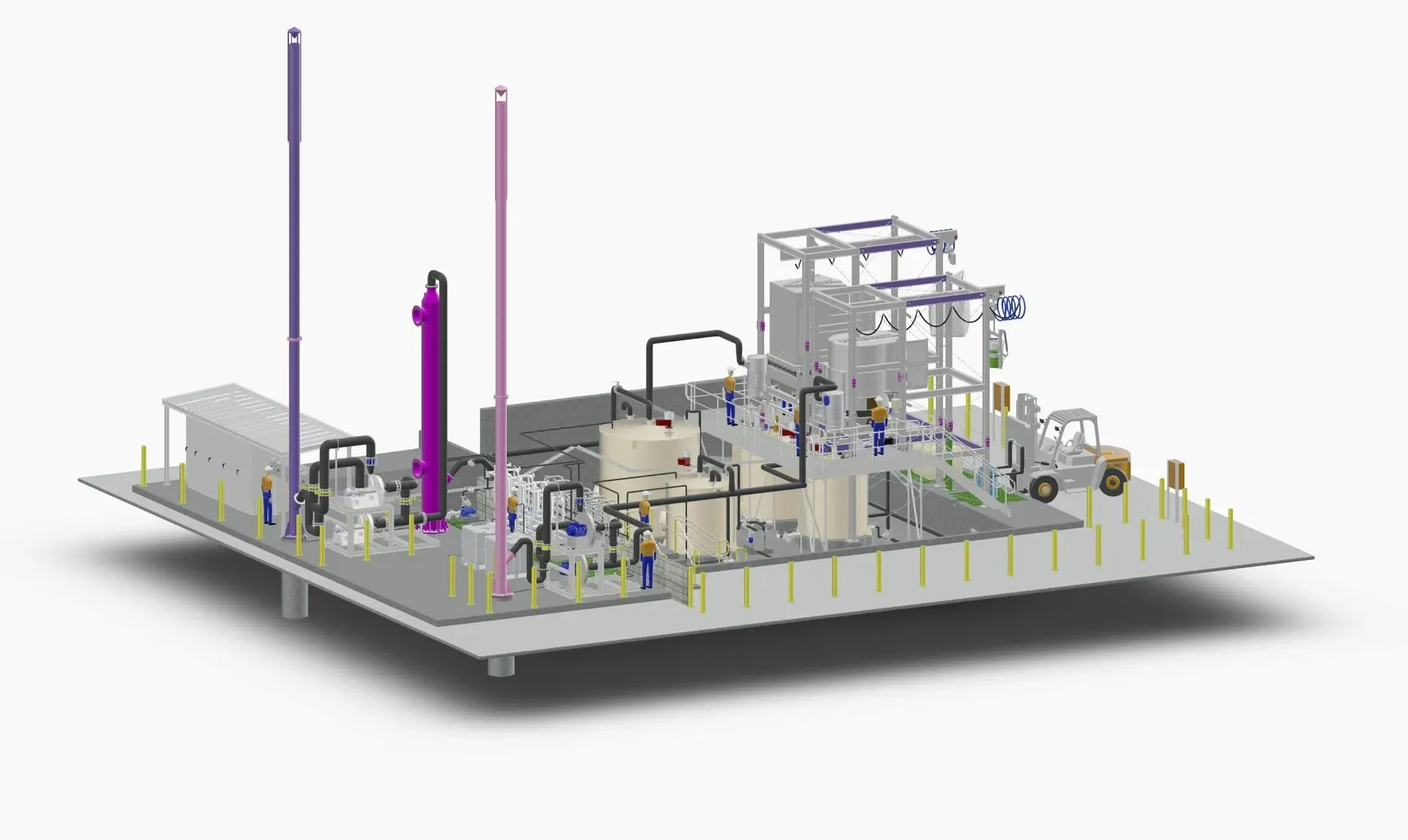
Reagent & flocculant plant
Reagent and flocculant preparation and dosing plants for coal handling and preparation plants, mineral processing and water recovery circuits. Compact, fully automated plants in liquid and powder configurations, engineered and fabricated in house and pre-erected in our workshop for fast site assembly and limited on-site work.
What a reagent dosing plant does
A reagent dosing plant prepares a reagent or flocculant solution and doses it at a controlled rate wherever the process needs it, typically into the thickener feed. In a coal handling and preparation plant (CHPP) or other mineral processing site, it sits alongside the thickener and the water circuit it serves.
Different chemicals do different jobs:
- Flocculants bind fine particles together so they settle.
- Coagulants destabilise very fine particles first, so they can then be bound together.
- Flotation reagents make a mineral float or sink, so it can be separated.
Used well, dosing can help fines settle faster and produce a denser underflow and a clearer overflow, which means more water can be recovered for reuse and less is lost to tailings. The results depend on your process, the material you’re treating and how consistently the chemical is prepared and dosed, which is why a reagent plant or flocculant plant is designed around the application. Tell us about your thickener, your feed and your water circuit, and we’ll help you shape a plant that fits.
Why the preparation plant matters
A reagent or flocculant is only as good as the way it's prepared and dosed. When it's poorly mixed, under-matured or inaccurately dosed, it costs you twice: once in the chemical itself, and again in lost recovery and lost water. A few failure modes show up again and again.
Clumped polymer
If powder flocculant isn't wetted and dispersed properly, it forms clumps that don't dissolve and don't work.
Inconsistent solution strength
If the solution varies from batch to batch, the thickener gets a different dose each time.
Dosing that doesn't follow the feed
If the dose stays fixed while the feed changes, you either overdose, wasting chemical, or underdose, losing settling performance.
Each of these pushes up chemical consumption and operational costs, and they're often traced to a makeshift or ill-equipped preparation setup, not the chemical itself. A purpose-designed preparation plant gives you a consistent solution to dose from, so the rest of the circuit can run as intended. Tell us how your plant runs today, and we'll show you where preparation and dosing can be improved.
How a flocculant preparation and dosing plant works
Every reagent dosing plant we design follows the same path, from raw polymer to dosed solution, and each stage is built around your process.
Powder handling and wetting
Powder flocculant is loaded from a bulk bag or hopper and metered by a feeder into a wetting stage, where it's dispersed so the polymer doesn't clump. Dust and manual handling controls are designed in, so your team isn't exposed to powder and heavy lifting is kept to a minimum. Liquid systems skip this stage and start at dilution.
Mixing and maturation
Gentle agitation mixes the dispersed polymer, and a maturation period gives it time to develop fully before it's used. Too much shear or too little time can both reduce performance, so tank size and mixing are matched to your polymer and flow.
Dosing and dilution
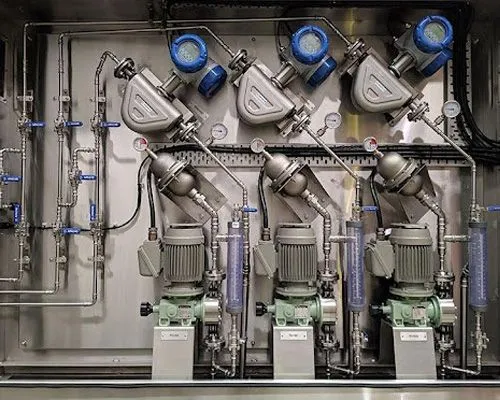
Reagent dosing pumps or metering pumps move the solution to where it's needed, with variable-speed drives to adjust the rate. Inline dilution brings the solution to the right strength before it's injected, and the injection point is chosen to mix well with the thickener feed.
Controls and automation
A PLC runs the plant, with interlocks on critical components and alarms that flag faults. The dose rate can be paced to feed flow or solids, so it follows the process instead of staying fixed. Where required, remote monitoring and real-time data give you visibility without needing someone on site.
Plant design and construction
We design and build reagent and flocculant plants in our own workshop, so each one is shaped to your site. The layout is compact to keep the footprint small, stainless steel is available for hostile environments, and interlocks protect the critical components. A high-spec paint system, inside and out, helps the equipment last in corrosive conditions.
Before anything ships, the plant is trial pre-erected and assembled in the workshop, so site assembly runs smoothly with limited work on site. Depending on your site, we deliver it in the format that suits.
Packaged dosing skids
A self-contained skid you connect to your process.
Dosing pump cabinets
Custom-designed for hazardous and non-hazardous fluids.
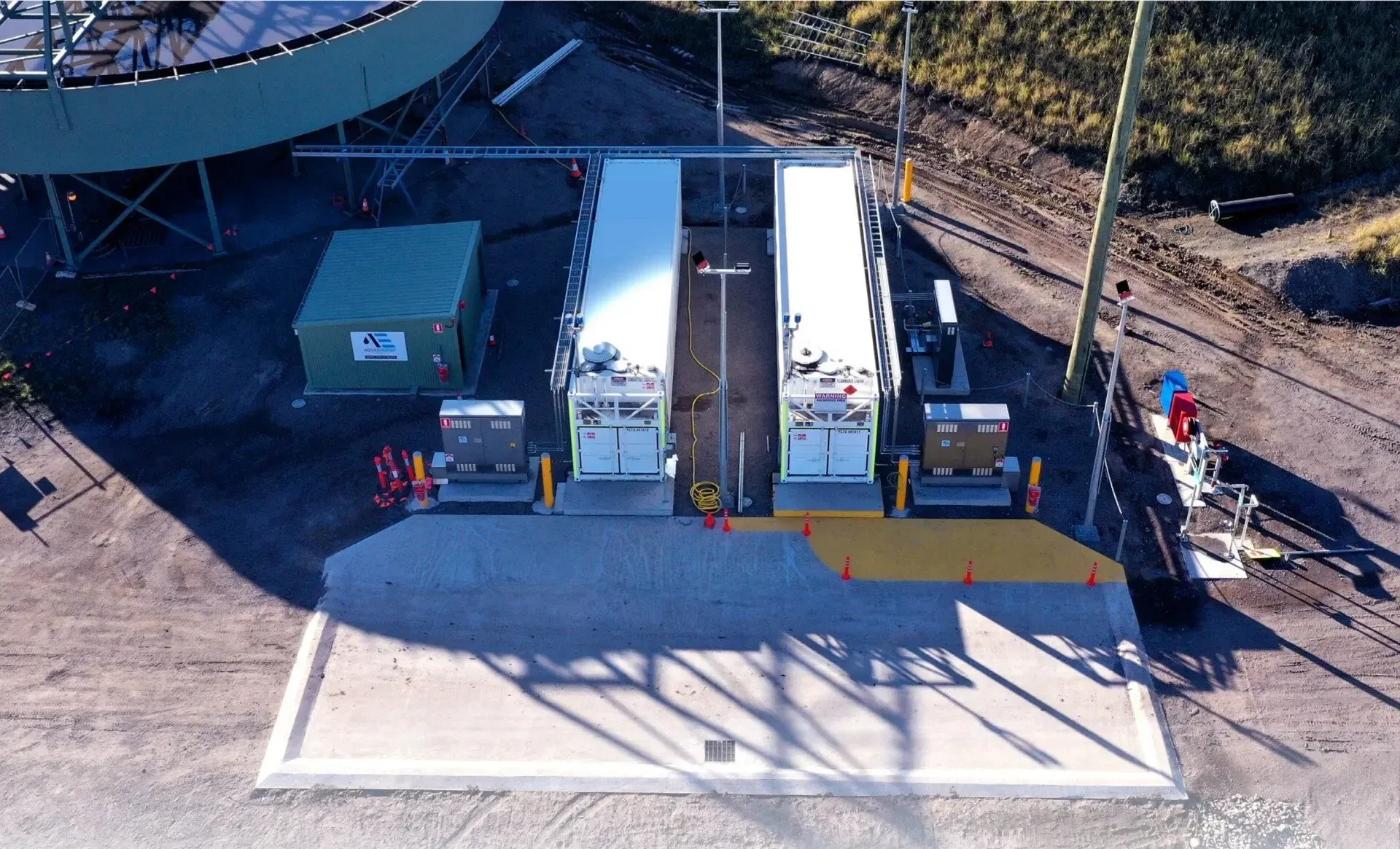
Containerised storage
Large 40 ft units for chemical storage, as at our Mt Owen CHPP project.
Each format can be combined into a complete reagent dosing plant, with the controls, lighting and flow monitoring around it.
Part of the wider water circuit
A flocculant plant rarely works alone. The same flocculants that settle fines in a thickener also help solids settle in recycling tanks and treatment plants, so dosing fits into several parts of your water circuit. Thickener overflow, once clarified, becomes a water source you can recycle back into the process.
That's why we design the dosing plant with the water system around it. In a heavy vehicle wash bay, flocculant can speed up settling in the recycling tank, so solids are easier to remove and the water is cleaner to reuse. In our water treatment plants, including containerised plants, dosing is planned in with the pumping, storage and treatment stages, so the whole system works as one.
Considering the complete water cycle helps you make better use of the water you have and manage chemical use across the site. Tell us where water enters, moves and leaves your operation, and we'll show you where dosing can help.
Features and benefits
Features
- Efficient compact layout that minimises total footprint
- Liquid and powder processes available
- Stainless steel construction for hostile environments
- Interlock protection for all critical components
- Very high process and operational availability
- Trial pre-erection and assembly in our workshop
- High quality internal and external paint specification
Benefits
- Fully automated operation
- Very low operational costs and limited maintainable items
- Reduced dependence on the tailings dam
- Maximised soluble metal recovery
- Increased process throughput
- Fluent site assembly with limited site work
Frequently asked questions
What does a reagent plant do in a mining operation?
A reagent plant prepares a reagent or flocculant solution and doses it at a controlled rate where the process needs it, typically the thickener feed. Used well, it can help fines settle faster and more water be recovered for reuse, depending on your process and material.
What is the difference between a reagent and a flocculant?
A reagent is any chemical added to a process to cause a specific effect, such as making a mineral float or settle. A flocculant is a type of reagent that binds fine particles together so they settle. Coagulants are another type, used to destabilise very fine particles first.
Do you build liquid or powder flocculant systems?
Both. Powder systems include wetting and maturation stages to prepare the solution, while liquid systems start at dilution. Which suits you depends on the chemical you use, your volumes and how your team handles materials. We'll help you choose.
How much site work does a reagent plant need?
Usually less than you'd expect, because the plant is built and trial pre-erected in our workshop, so site assembly runs smoothly with limited work on site. You'll still need to plan power, water and pipework connections and the area the plant sits in, and we'll work through these with you.
Talk to us about reagent and flocculant plant.
Design, supply, install and commissioning delivered as one turnkey package, built to Australian and International Standards. Send us the duty, the site and the timeline, and we'll come back with a proposal.
- Tell us about the job
The site, the application and anything you already have, such as drawings, a protocol or a duty point.
- Our engineering team responds
A member of our engineering team will respond within 24 hours.
- Proposal and concept
A free proposal and concept design, with no obligation.