Walkway & pontoon management system
Equipment on the water is only as useful as the access to it. Aqua Energy Group designs and builds floating walkways, gangways and access pontoons for tailings dams, water storages, reservoirs and rivers. They provide operators and maintainers with a safe, stable route from the bank to pumps, intakes and instruments.
We engineer each floating walkway around the storage and its water-level range, so access stays usable from full supply to drawdown. Systems are modular, made from non-corrosive materials, and can be relocated when a dam is raised or decommissioned. Because we design the access alongside the equipment it serves, it works with the pipework, cabling and people from day one.
Safe access to equipment on the water
Pumps, intakes and instruments on tailings dams, water storage dams and rivers are only as useful as their access. Our walkway and pontoon systems give operators and maintainers a stable, safe route from the bank to equipment on the water, so routine inspections, maintenance and changeovers don’t depend on boats or temporary arrangements.
Because water levels in a storage move, access has to move with them. Floating walkways and pontoons rise and fall with the surface, while gangways and hinged connections to the bank or a fixed jetty accommodate the change in level between full supply and drawdown.
Designing access for changing water levels
Water levels in tailings dams, storages and reservoirs rarely stay still, and a floating walkway is built to follow them. Because it floats, it rises and falls with the water, so access to pumps, intakes and monitoring points can stay safe across the whole level range.
Design starts with your storage. We look at the range between full supply and drawdown, because that sets how far the walkway needs to move. Then we design the connections.
Gangway length and angle
At low water, the gangway must still reach the shore at a slope people can walk safely, which affects how long it needs to be.
Hinged shore connections
Lets the gangway pivot as the level changes.
Mooring and anchoring
Holds the pontoon walkway in position while letting it move with the water.
Articulation between modules
Lets sections move relative to each other, so the walkway can follow the water.
Each of these is designed around your storage, your water level range and the equipment the walkway supports, including an access pontoon where equipment needs a stable working platform.
Walkways, gangways, jetties and bridges
Access systems can be built with integrated fixed jetties, gangways, walkways, bridges and other access options, configured to the shoreline, the distance to the equipment and the range of water levels the site experiences. The design specifies handrails, non-slip decking and lighting to meet site safety requirements.
Walkways and pontoons are designed alongside the equipment they serve. On a pontoon pump station, access is included from the first design review, so the pump, pipework, cabling and people all have a route to shore that works at every water level.
Safety and compliance
Anyone walking over water needs protection from falls and slips, so safety is designed in from the start. Handrails and kickrails guard the edges, non-slip decking gives secure footing in wet conditions, and lighting supports safe access at night and in poor weather.
The standards and requirements that apply depend on your site and the structure, and mine sites often have their own. Share them early, and we'll confirm what applies at the design stage and build it into the layout, so the walkway suits both the water and the way your team works.
Materials and construction
Floating access systems work in demanding conditions, from clean water storages to aggressive tailings, so we build them from non-corrosive materials chosen to suit your water and environment. The modular, low-weight construction makes walkways easier to transport and install, and because the modules can be separated and moved, the system can be relocated when a dam is raised or decommissioned.
No two storages are the same, so every project is specified individually. For each one, we confirm the following.
Walkway width and module length
Load rating
Float and deck materials
Handrail system
Maximum gangway incline
Tell us about your storage, the equipment the walkway supports and how your team will use it, and we'll confirm the configuration with you.
Features and benefits
Features
- Floating walkways and access pontoons
- Integrated fixed jetties, gangways and bridges
- Designed for moving water levels
- Handrails, kickrails, non-slip decking and lighting
- Non-corrosive material options
- Modular, low-weight construction
Benefits
- Safe access to equipment on the water
- Relocatable systems
- Low maintenance
- Reduction of operational costs
- Integrated with pontoon pump stations
Delivered projects
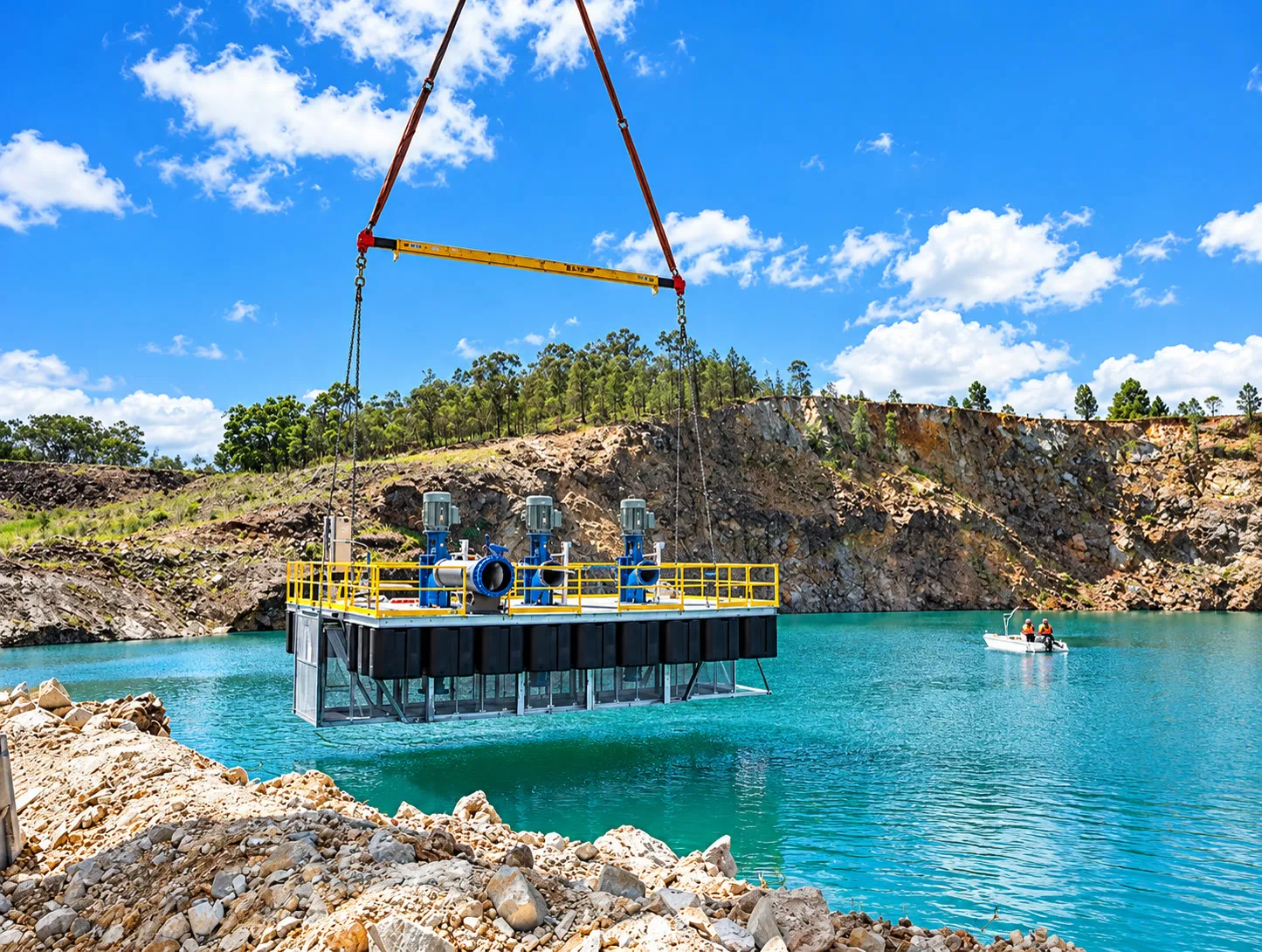
NSW Water Utilities Drought Relief
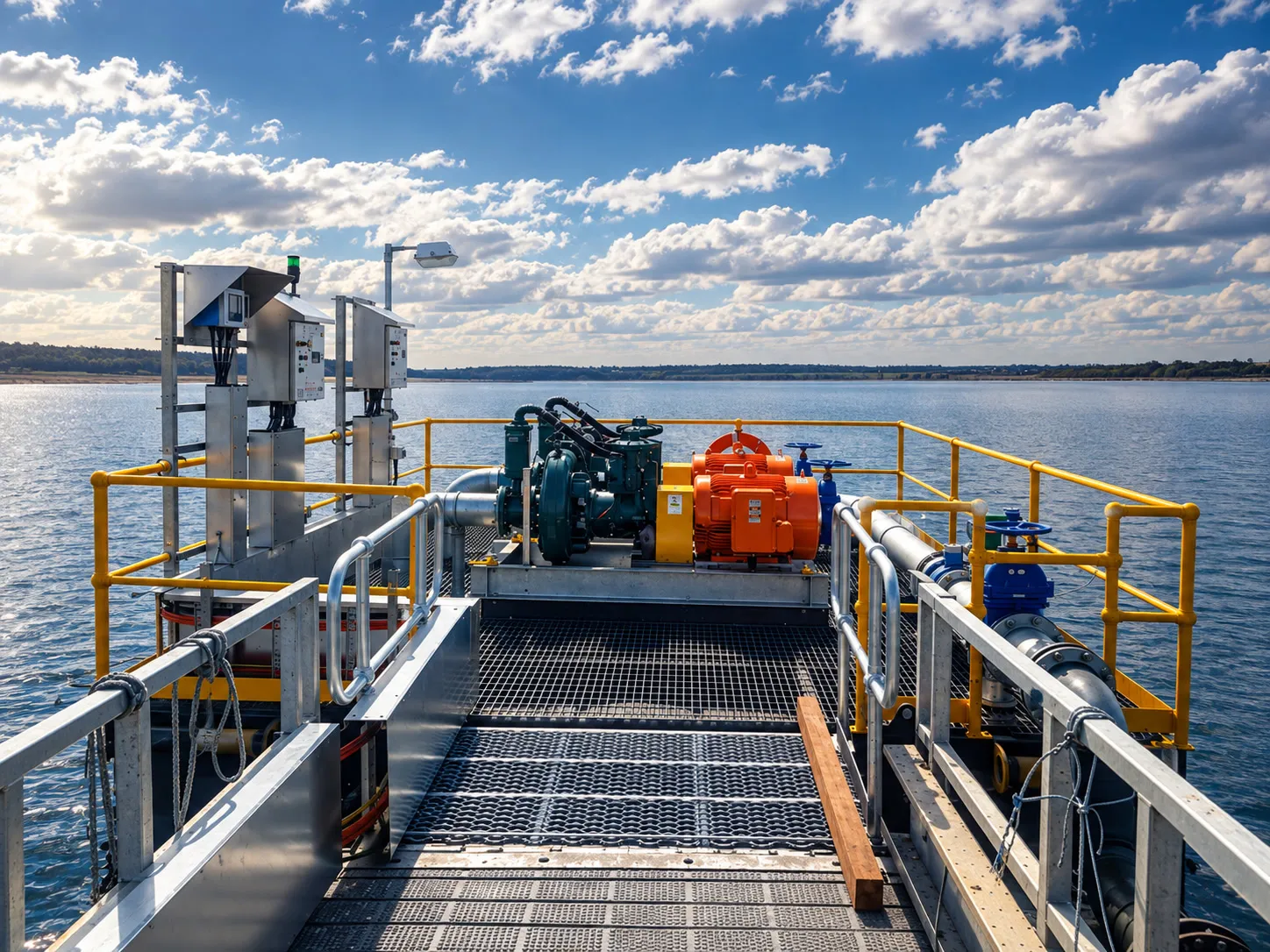
Ravensworth Pontoon Pump Station
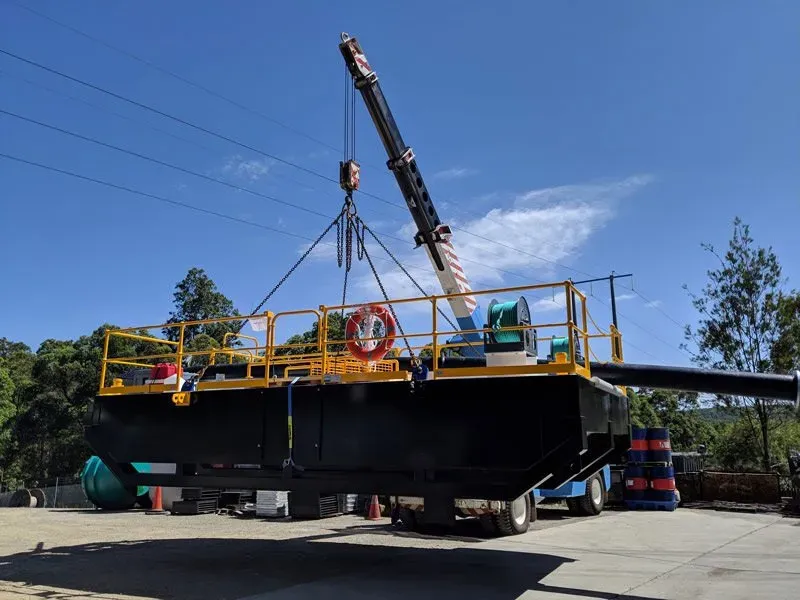
BHP/BMA Tailings Storage Management Project
Frequently asked questions
What is a floating walkway used for?
A floating walkway gives people safe access to equipment on the water, such as pumps, intakes and monitoring points on tailings dams, water storages and reservoirs. It rises and falls with the water, so access stays available as levels change.
Can walkways be supplied with a pontoon pump station?
Yes. Pontoon pump stations can be built with integrated jetties, gangways, walkways, bridges and other access options, so the pump, pipework, cabling and people all have a route to shore. We include access from the first design review.
What materials are pontoons and walkways made from?
Non-corrosive materials chosen to suit your water and environment, from clean water to aggressive tailings. The modular, low-weight construction makes transport and installation easier. We confirm the specific materials for each project.
How does a floating walkway cope with changing water levels?
It floats, so it rises and falls with the water. We design the connections around your storage's range between full supply and drawdown, with a gangway sized for the angle at low water, hinged shore connections, mooring and anchoring that allow movement, and articulation between modules.
Can a floating walkway be relocated?
Yes. Modular, low-weight construction means a pontoon walkway can be relocated when a dam is raised or decommissioned. Mooring, shore connections and site conditions at the new location need planning, so tell us early if a move is likely.
Talk to us about walkway and pontoon management system.
Design, supply, install and commissioning delivered as one turnkey package, built to Australian and International Standards. Send us the duty, the site and the timeline, and we'll come back with a proposal.
- Tell us about the job
The site, the application and anything you already have, such as drawings, a protocol or a duty point.
- Our engineering team responds
A member of our engineering team will respond within 24 hours.
- Proposal and concept
A free proposal and concept design, with no obligation.