
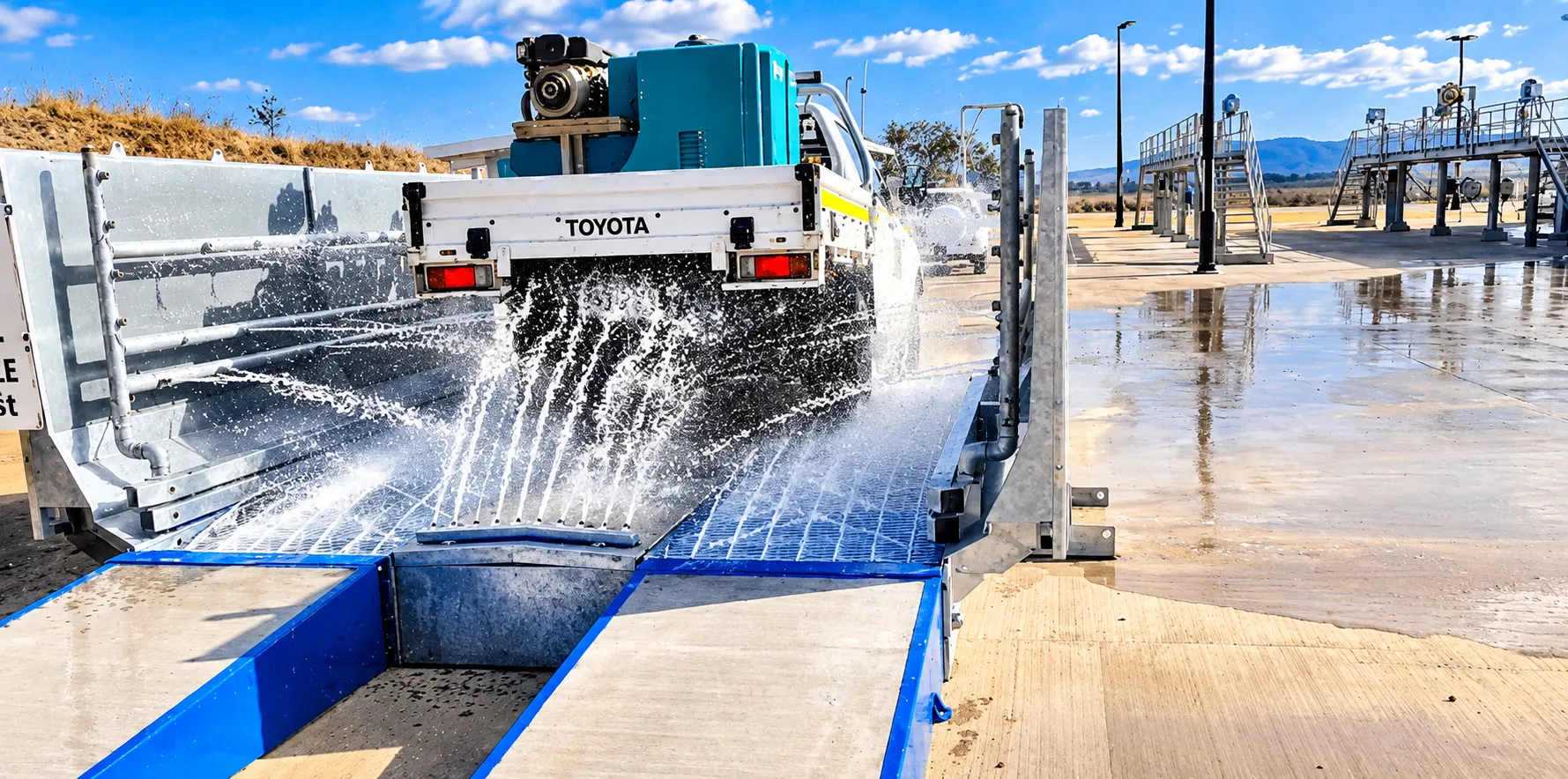
Ute driving through a weed and seed wash ramp, water spraying its wheels and underbody
Biosecurity Solutions

Weed seed & biosecurity wash

A fleet that moves between sites can carry more than just mud and dirt. Weed seeds and plant material in the soil can be trapped around tyres, wheels and underbodies, creating a risk of spreading unwanted weeds to new areas. Without the right cleaning process, that material can create operational challenges for sites managing weed hygiene and biosecurity requirements. That's where a dedicated weed and seed washing unit comes in.

At Aqua Energy Group (AEG), we design, supply, install and commission weed washing facilities around your site’s needs. Our solutions use the MobyDick ConLine KIT Flex platform with closed-loop water recycling to support vehicle hygiene across mining, Defence, renewable energy construction, road and rail, councils and agriculture.

Automated wheel wash
The Risk

Why vehicles spread weeds and seeds

When you're operating a busy worksite, vehicles and mobile machinery can spread weeds simply by moving from one location to another. Weed seeds, soil and plant material can become lodged in tyre treads, underbodies, radiators, trays and other hard-to-reach areas. When carried to another location, this material can introduce unwanted weeds to previously unaffected areas. For site operators and landholders, managing this risk is an important part of protecting the surrounding environment and meeting biosecurity responsibilities.

That's why weed and seed hygiene matters when managing vehicle movements. Across Australia, state and territory authorities provide biosecurity frameworks and weed hygiene guidance to help prevent the spread of weeds. Requirements can vary depending on the location, type of work and conditions set by a site or landholder.

This is where our engineering team comes in. During the design phase, we consider relevant biosecurity requirements, site conditions and operational needs to help develop a wash system from our MobyDick product line that will suit your project. Where applicable, this includes considering weed hygiene obligations and declaration requirements, helping you make informed decisions about the equipment and processes needed for your site.

How It Works

How the wash system works

Low-pressure, high-volume nozzle bars

Across our MobyDick product range, strategically positioned nozzle bars direct water around tyres and lower vehicle areas to help dislodge soil, weed seeds and other plant material. We can work with you to determine a custom configuration for your vehicles, site conditions and weed hygiene requirements.
Chassis and undercarriage wash

Soil and plant material can also collect beneath vehicles and around chassis components. These harder-to-reach areas are important to consider when managing the risk of spreading weeds between sites. We'll help you assess your vehicles and operating conditions to determine how your washdown solution can target the areas most relevant to your weed hygiene requirements.

Closed-loop water recycling and solids removal

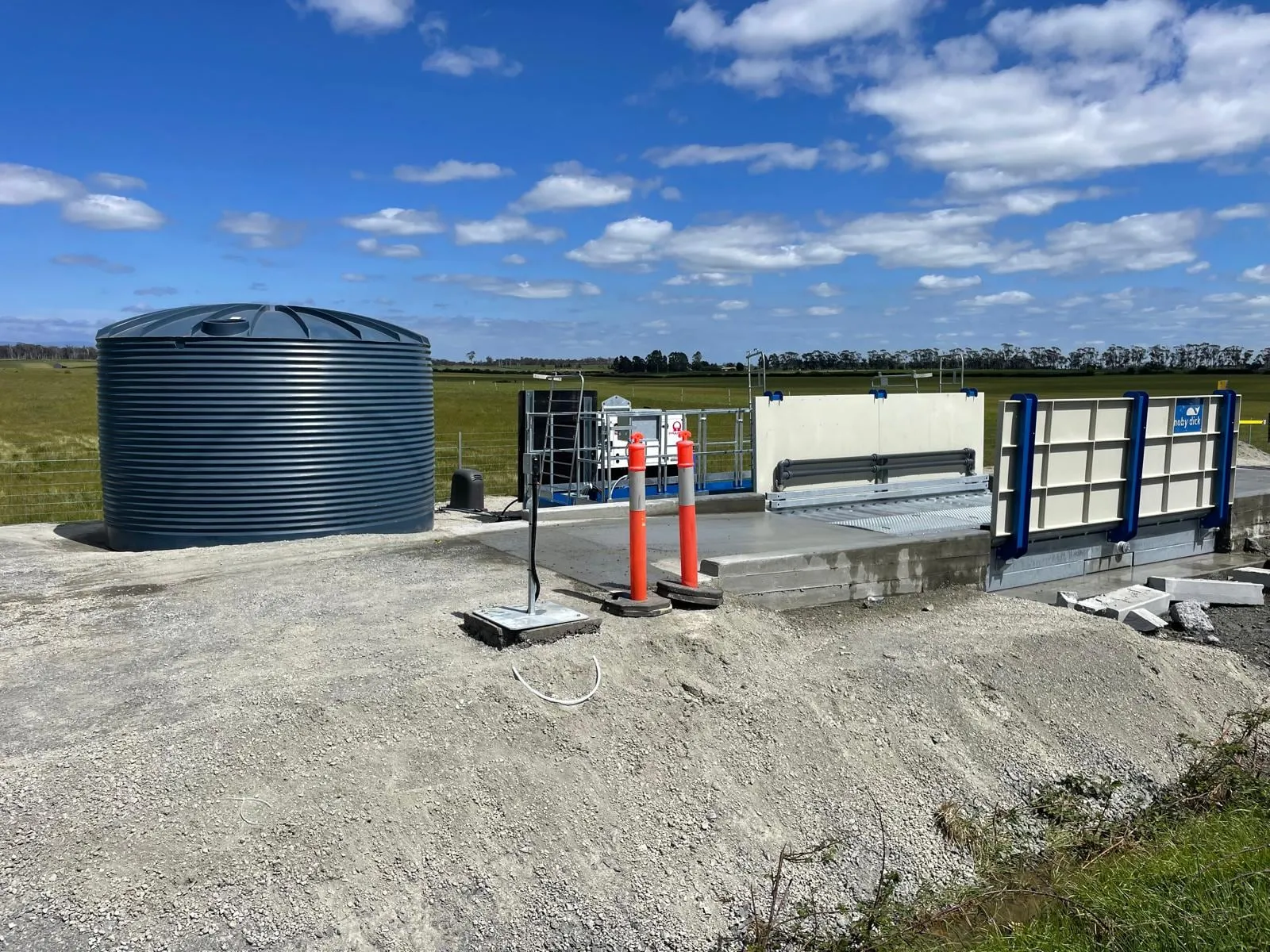
Closed-loop systems collect and reuse wash water, while recycling tanks allow heavier solids to settle for periodic removal. The right arrangement depends on the equipment and site requirements. Regular maintenance is essential to keep the system operating effectively and manage the soil and debris collected during washing.

Installation and commissioning

From equipment selection through to installation and commissioning, we consider how the wash solution will work within your site. Our team takes your operating conditions, vehicle movements and relevant biosecurity responsibilities into account to help develop a practical solution for your needs. The aim is to make weed and seed washdown a workable part of your operation, helping your team manage vehicle movements with greater confidence.

Options

Disinfection and biosecurity options

Depending on your site and biosecurity requirements, additional features can help strengthen your vehicle washdown process. Options such as disinfectant dosing, additional spray bars and undercarriage washing can be considered to help target areas where soil, weed seeds and other unwanted material may collect.

For operations that are in close contact with, or actively managing, risks such as avian influenza, disinfection may form part of the overall process. The effectiveness of any treatment depends on factors such as the disinfectant selected, application method and operating conditions. These measures should support your site's biosecurity procedures rather than replace them.

Water management is another consideration. Depending on the equipment selected, chemical dosing may help condition wash water so that suspended dirt and other solids clump together and settle out for removal. Rinse arches may also be suitable for certain applications, depending on your vehicles and washdown requirements.

A vehicle disinfection gate or water treatment plant may also be worth considering as part of your site's broader biosecurity approach. We'll work with you to understand how vehicles move through your site, the conditions you're working with and your weed hygiene responsibilities, then help you explore the options that best suit your operation.

Features and benefits

Features

  • Hot-dip galvanised, water-carrying wash unit
  • Splash protection walls with triple nozzle bars
  • 7 mm nozzles with oscillating low-pressure, high-volume output
  • Chassis and undercarriage wash
  • Wash elements rated to 15 tonne axle load
  • Entry and exit ramps for installation without civil works
  • Containerised pump system
  • Disinfectant dosing options

Benefits

  • Weed and seed compliance for vehicle movements
  • Closed-loop water recycling
  • Built-in flocculant dosing for easier solids removal
  • Alternative to in-situ site construction
  • Automated wash with repeatable results
  • Compatible with water treatment options

Frequently asked questions

What is a weed washing unit?

A weed and seed washing unit is a vehicle wash system designed to help you meet your biosecurity measures and regulations by removing soil, weeds, seeds and other plant material from tyres and hard-to-reach areas under your vehicle.

Can a weed washing unit also disinfect vehicles?

A weed and seed washing system focuses on removing soil, weed seeds and other plant material from vehicles, while a vehicle disinfection gate is designed to apply disinfectant to help manage biological risks. Used together, they can form part of a broader biosecurity approach for your operation, helping you address both physical contaminants and the need for disinfection where required.

Does the system need civil works?

Not necessarily. Site requirements vary depending on the equipment selected and existing site conditions.

What add-ons are available?

It depends on your needs. Options may include additional spray bars, undercarriage washing, rinse arches, chemical dosing and water treatment. We'll help you identify the features that best suit your vehicles and biosecurity responsibilities.

Do vehicles still need a weed hygiene inspection after washing?

They may. Washing can help remove soil and plant material, but it doesn't guarantee every seed or contaminant has been removed. Follow the relevant site procedures and applicable inspection or declaration requirements.

Is a low-pressure wash as effective as high-pressure water?

Not necessarily in every application. Low-pressure, high-flow systems can be suited to washing tyres and lower vehicle areas, but effectiveness depends on the equipment, vehicle, soil conditions and wash process. We'll help you assess what suits your operation.

Talk To Us

Talk to us about weed seed and biosecurity wash.

Design, supply, install and commissioning delivered as one turnkey package, built to Australian and International Standards. Send us the duty, the site and the timeline, and we'll come back with a proposal.

Request a quote

Your details stay with AEG and are never shared.

  1. Tell us about the job

    The site, the application and anything you already have, such as drawings, a protocol or a duty point.

  2. Our engineering team responds

    A member of our engineering team will respond within 24 hours.

  3. Proposal and concept

    A free proposal and concept design, with no obligation.

Prefer to talk? 1800 092 210