
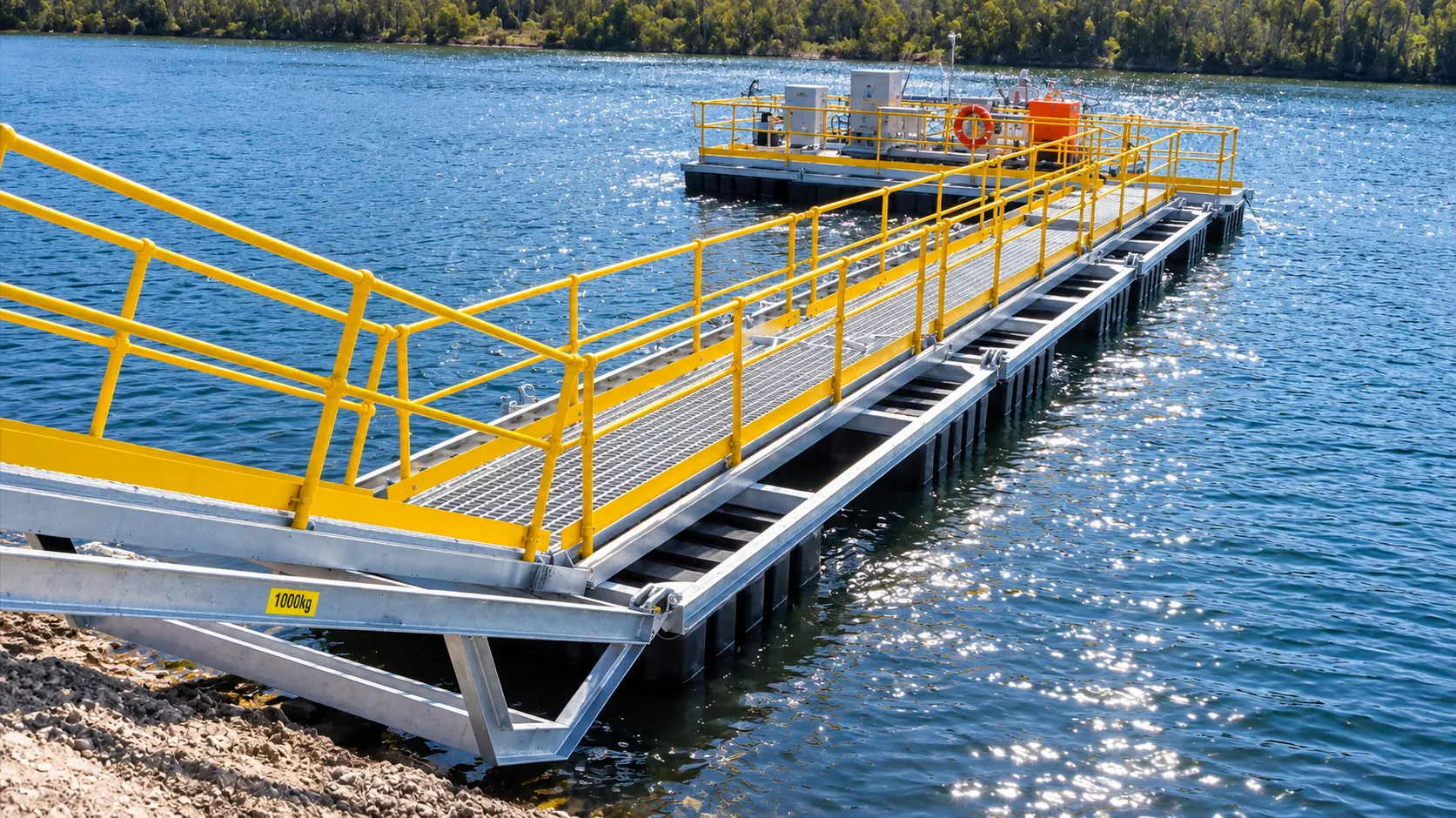
Pontoon pump stations
A pontoon pump station puts the pump on the water, so it keeps working as levels rise and fall. Aqua Energy Group designs, builds and commissions pontoon pump stations for tailings dams, open pits, rivers and reservoirs across Australia.
Our pontoon pump stations are marine-engineered, mine-compliant, modular, and low-weight. We test and commission every station before dispatch, and build to Australian and International Standards for a long operating life.
How a floating pump pontoon works
A pontoon is a buoyant floating platform that carries the pump, pipework and controls. Because the pump floats, it rises and falls with the water level. Suction lift stays short, and the intake stays clear of sediment on the dam floor.
That removes the need for a fixed intake structure or deep civil works. It also widens the range of pump types you can use. When the job moves, you can tow the station to a new position or relocate it to another site.
Where pontoon pump stations are used
Pontoon pump stations suit almost any body of water that needs moving, from small ponds to large storages.
Pumps and power on the pontoon
We fit each pontoon with the pump the duty needs. Options include submersible dewatering pumps and self-priming diesel or electric pumps. We also fit surface, centrifugal, column, slurry and fire pumps.
Electric stations run from shore through heavy-duty trailing cable, fed by kiosk substations or containerised switchrooms. Diesel stations carry their own fuel, with bunded fuel storage on the pontoon or on shore. Remote stations can run on solar-powered telemetry, so operators monitor flow and levels from site control. For in-pit dewatering without a pontoon, see our mine dewatering pumps.
Choosing the right pontoon
We engineer the pontoon around the pump, not the other way round. We size it on the maximum load it carries, including pumps, motors, pipework, fuel and people. Buoyancy and stability then have to hold in wind and waves.
Anchoring for fluctuating water levels and wind
A pontoon must stay on station from full supply level to drawdown. We design the anchoring system around the site's water-level range, wind exposure, and pond shape. Flexible discharge hoses, pipe floats and cable floats let the pipework and power follow the pontoon as levels change. The result is a station built to withstand wind and extreme weather while it keeps pumping.
Features and benefits
Features
- Reduced suction lift requirements
- Greater range of available pump configurations
- Integrated fixed jetties, gangways, walkways and bridges
- Submersible, self-priming, centrifugal, column, slurry and fire pump options
- Compact, modular and low-weight marine design
- Built to Australian and International Standards
- Full turnkey option available
Benefits
- Relocatable systems
- Non-corrosive material options to suit any environment
- Reduction of operational costs
- Low maintenance
- Increased reliability
- Lower risk of unauthorised dam overflows
Delivered projects
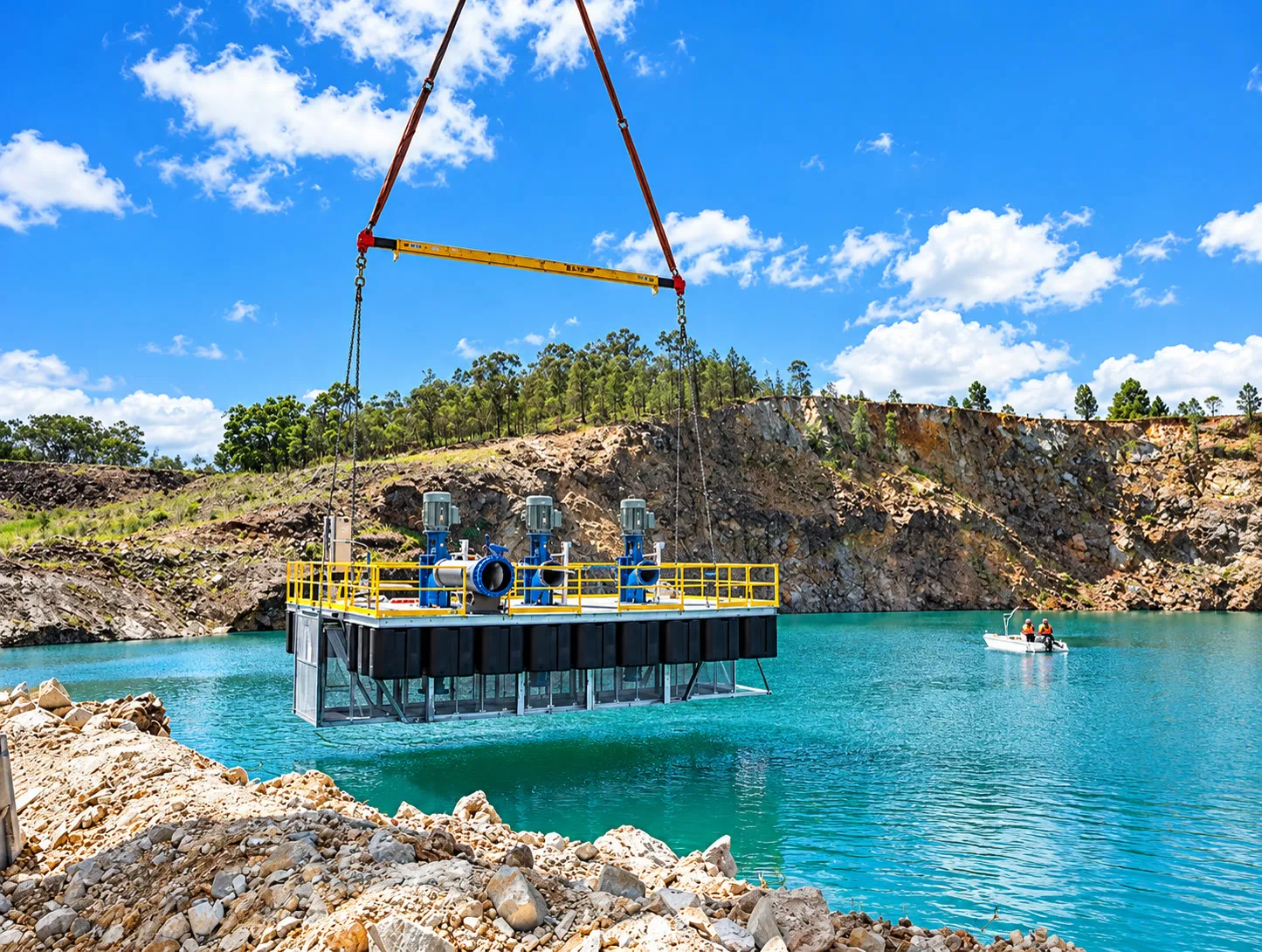
NSW Water Utilities Drought Relief
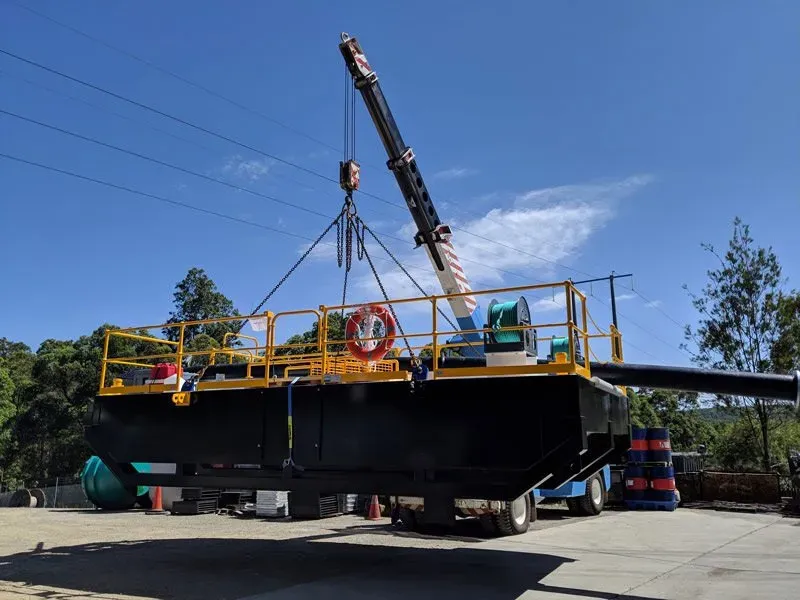
BHP/BMA Tailings Storage Management Project
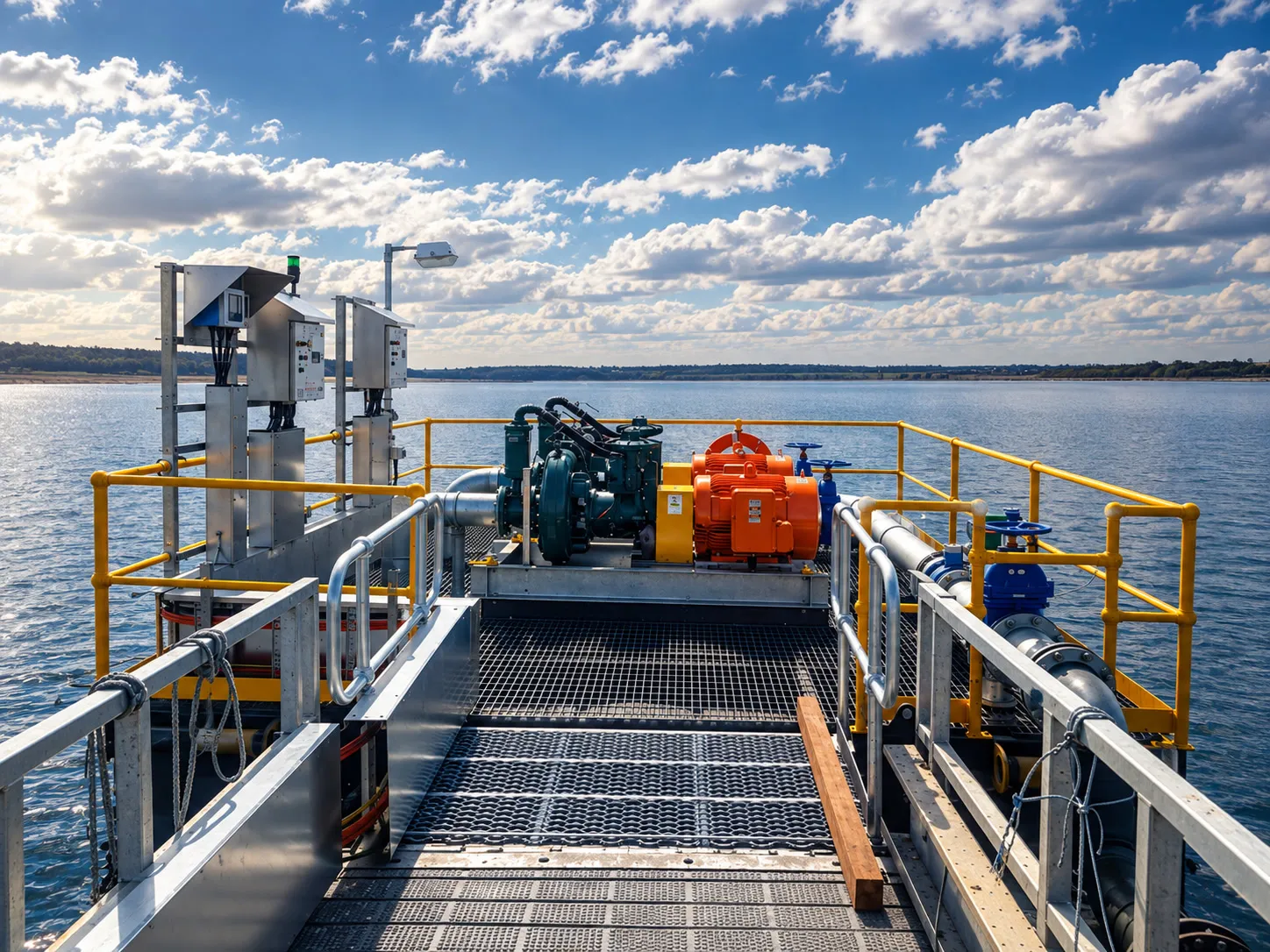
Ravensworth Pontoon Pump Station
Frequently asked questions
What is a pontoon pump station?
A pontoon pump station is a pump system mounted on a floating pontoon. It draws water from dams, pits, rivers or reservoirs and rises and falls with the water level. That keeps suction lift short and avoids the cost of a fixed intake structure.
How do floating pump pontoons cope with changing water levels?
The pontoon floats, so the pump moves with the water surface. Anchoring holds it on station across the full level range. Flexible hoses, pipe floats and cable floats let the discharge line and power cable follow it up and down.
What pumps can be mounted on a pontoon?
You can mount most pump types on a pontoon. We fit submersible, self-priming, surface, centrifugal, column, slurry and fire pumps, in diesel or electric drive. We then size the pontoon for the pump's weight, power supply, and fuel.
Should I choose a poly or heavy-duty pontoon?
Poly pontoons are lightweight and corrosion resistant, which suits tailings and remote sites. Heavy-duty pontoons carry larger pumps and multi-pump stations. The right choice depends on maximum load, water chemistry, site access and how long the station will stay in place.
Can a pontoon pump station be relocated?
Yes. Our pontoon pump stations are modular and low weight, so they can be moved. That suits a pit that advances, a dam that is raised or a project that ends. We plan for relocation in the anchoring, cabling, and pipework design from the start.
Talk to us about pontoon pump stations.
Design, supply, install and commissioning delivered as one turnkey package, built to Australian and International Standards. Send us the duty, the site and the timeline, and we'll come back with a proposal.
- Tell us about the job
The site, the application and anything you already have, such as drawings, a protocol or a duty point.
- Our engineering team responds
A member of our engineering team will respond within 24 hours.
- Proposal and concept
A free proposal and concept design, with no obligation.