
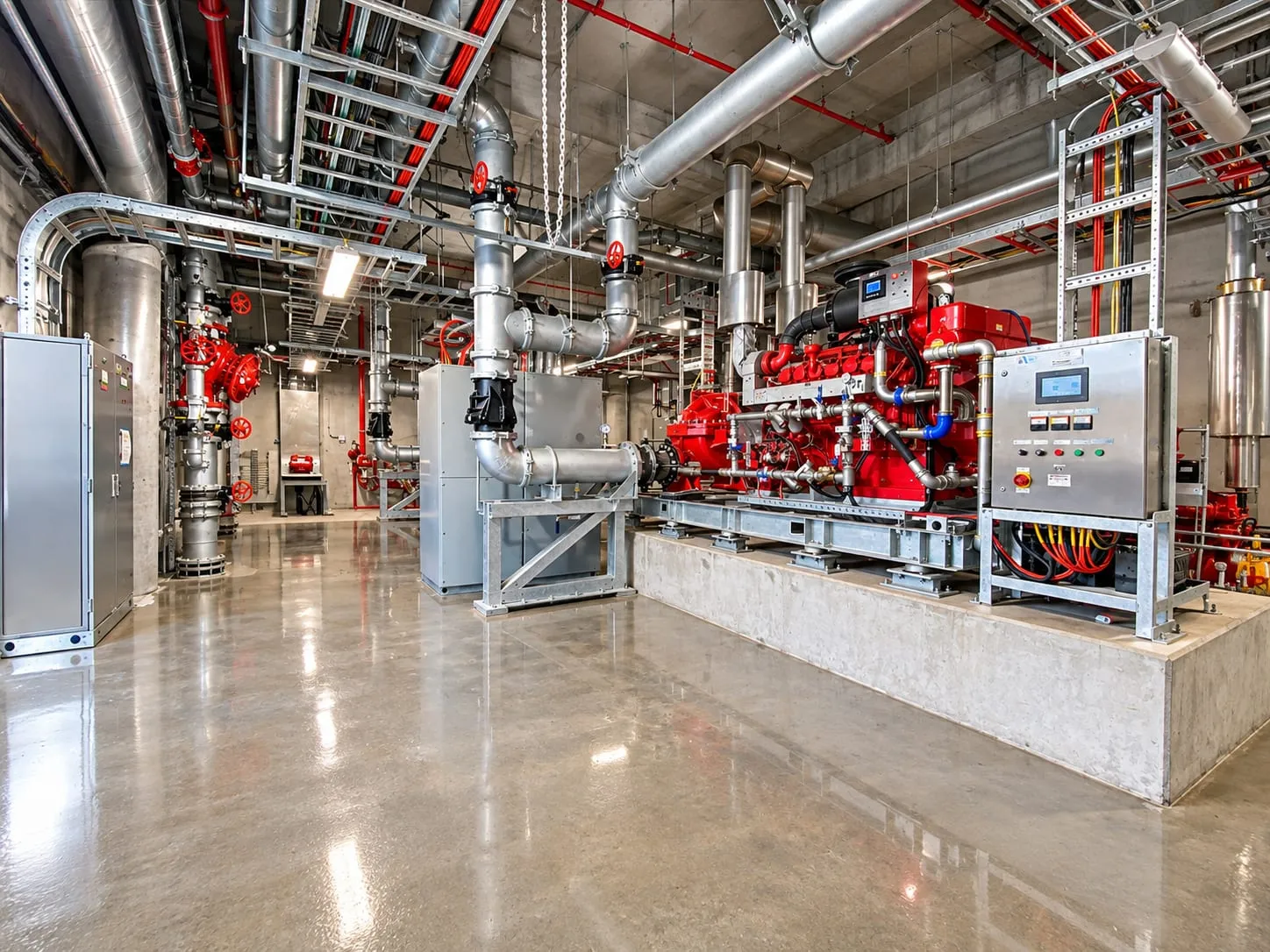
Tunnel & industrial deluge systems
Turnkey tunnel fire deluge systems and industrial deluge pumping for road and rail tunnels, enclosed carparks, commercial buildings and high-hazard industrial sites. We engineer the deluge pump sets, piping network, deluge valves and controls to your layout, and test the complete system before handover so it delivers its full flow the first time it is called on.
What is a deluge system?
A deluge system is a fire suppression system that floods a protected area with a large volume of water at once. It uses a network of pipes fitted with open nozzles or open sprinkler heads, connected to the water supply through a deluge valve. The pipe system stays dry and unpressurised until the deluge valve opens, and then water discharges from every nozzle in that area at the same time.
That is the key difference from a conventional sprinkler system. In traditional sprinkler systems, each sprinkler head is sealed and opens only when the heat at that head is high enough, so only one head activates at a time. A deluge fire suppression system does not wait for heat to reach each head. It wets the whole area immediately, which is why it is used where a fire could spread faster than conventional sprinkler systems can respond.
Turnkey deluge design and supply
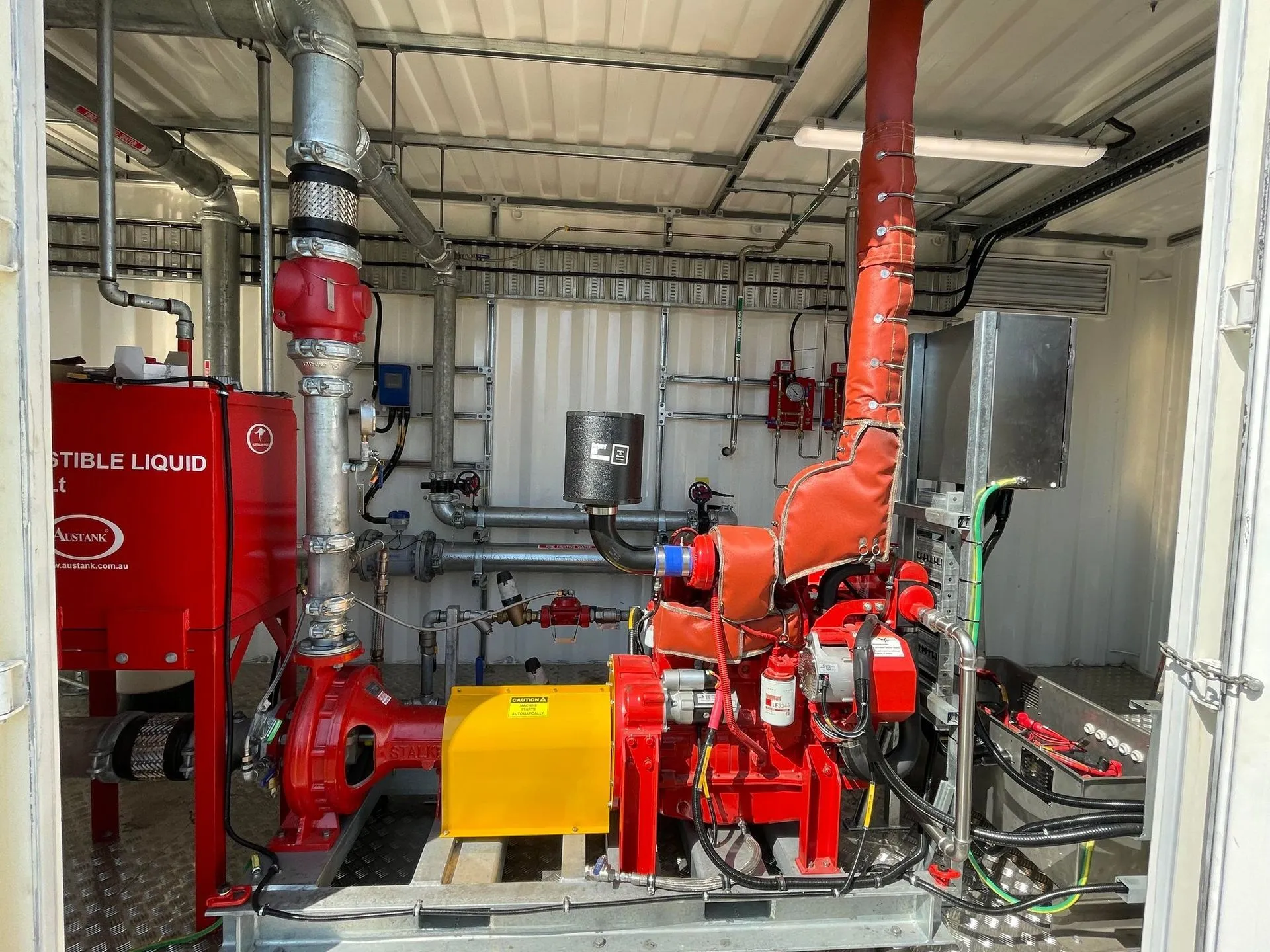
We provide complete turnkey tunnel fire deluge systems. The scope covers electric and diesel deluge pump sets, suction and discharge pipework, deluge valve arrangements that divide the area into zones, electrical switchgear and controls, and the interface to the site fire detection systems. Everything is customised to the tunnel or building layout, from the tunnel’s length and gradient to the number of zones and the pump room location.
Long fire mains need careful hydraulic design. When deluge valves open and pumps start, pressure transients travel through the pipework, and a system that ignores them can damage itself the first time it operates.
Testing the fire protection and fire detection systems before handover
Fire protection systems may sit idle for years before they are needed, so we test every deluge system before handover. Testing covers pump performance, deluge valve operation in each zone, response to detection signals, and manual release. Commissioning documentation is part of the handover, giving building owners, asset operators, and certifiers a clear record of how the system was proven and how to maintain it.
Tunnel fire deluge systems and deluge zones
In a road or rail tunnel, the deluge system runs along the tunnel's length, with pipework and nozzles mounted on the ceiling or walls. The tunnel is divided into deluge zones, each a tunnel length fed by its own deluge valve. When a fire is detected and confirmed, the valves open for the zone over the fire, and often the adjacent zones, so water goes where the fire is, and the pump capacity isn't spread across the whole tunnel.
Zoning also makes a tunnel system practical to supply: fire pumps, water storage, and pipework are sized for the largest group of zones that may operate at once, not the entire tunnel.
How a deluge fire suppression system works
A typical deluge system has four working parts, each critical: the fire detection system, the deluge valve, the piping network, and the water supply.
Detection
Heat detectors, smoke detectors or flame detectors monitor the protected area. The detection systems are separate from the sprinkler heads.
Release
In industrial systems, the fire detection system automatically signals the deluge valve to open. In major road tunnels, detection alerts the control room, and operators activate the zone. A manual release is also provided for emergencies and testing.
Discharge
The deluge valve releases water into the dry pipework and out through all open nozzles in that zone at once.
Supply
Fire pumps start and hold the water flow and pressure the nozzles need for as long as the system runs.
Most deluge systems discharge only water. Where the hazard involves flammable liquids, some systems add foam concentrate to the water to help extinguish fires that water alone would struggle with. In both cases, the water spray also cools nearby structures, equipment, and people.
Industrial deluge systems for hazardous environments
The same engineering applies well beyond tunnels. Deluge systems are used wherever a large area has to be wetted instantly, or a fire could spread rapidly, including:
Enclosed car parks, shopping centres and commercial buildings
Chemical plants, power plants and fuel storage facilities
Conveyor galleries, processing plants and other hazardous environments in mining
Transformers and areas with flammable materials or combustible dust
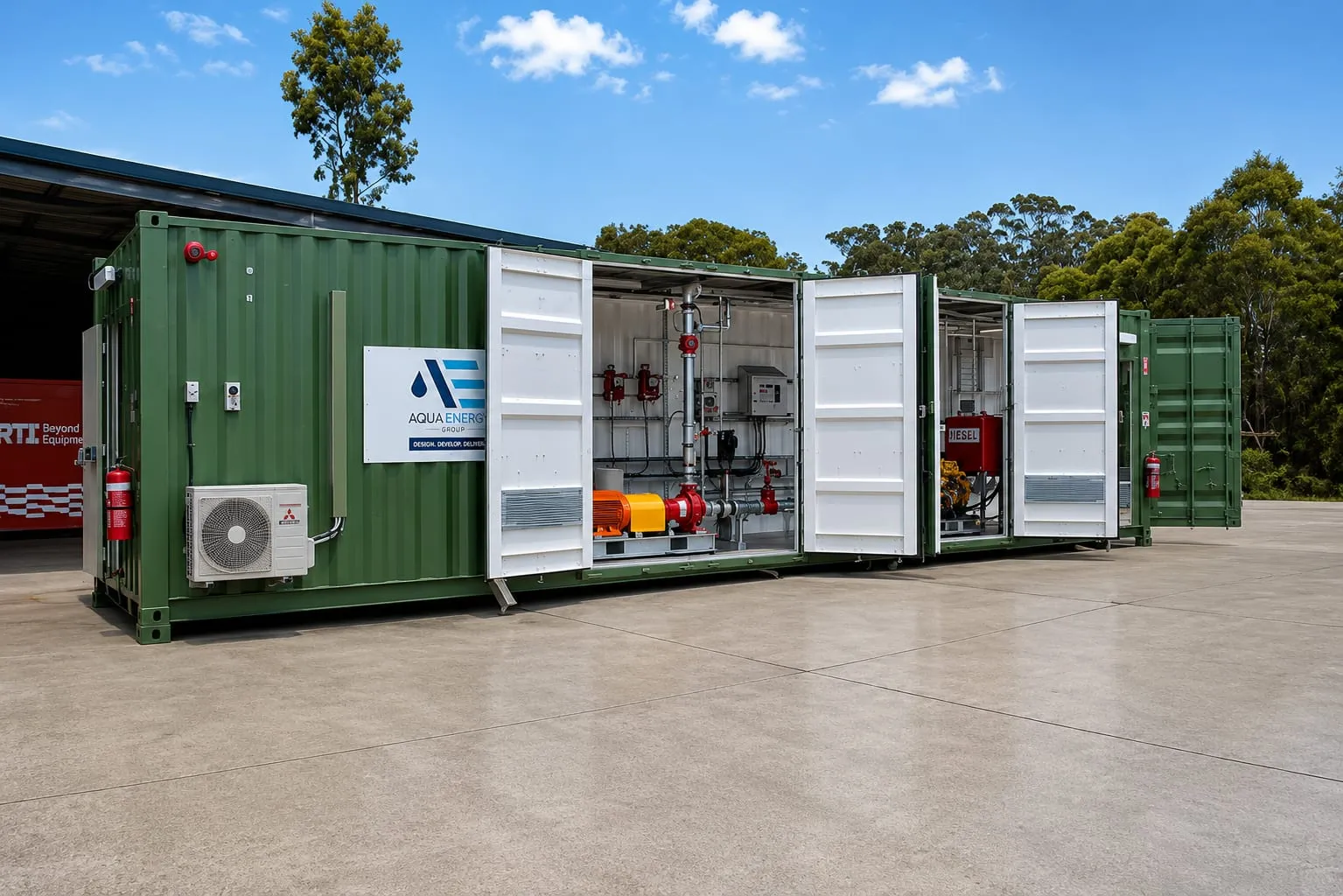
In each case, a reliable fire water supply is at the heart of the system. Our deluge pump sets are built on the same platform as our fire pump systems, in electric and diesel configurations. We can deliver them as a pump room fit-out or in a modular enclosure.
Features and benefits
Features
- Customisable to the tunnel or building layout
- Engineered to comply with industry standards
- Electric and diesel deluge pump sets
- Zoned deluge valves with open nozzles or open sprinklers
- Automatic or operator activation from fire detection, with manual release
- Hydraulic design that accounts for pressure transients
- Complete turnkey scope from design to commissioning
Benefits
- Rapid fire suppression across a large area
- Cooling that protects people, structures and equipment
- Compliance with fire protection standards and regulations
- Rigorously tested before handover
- One contractor for pumps, pipework, valves and controls
Frequently asked questions
What is a deluge system?
A deluge system is a fire suppression system with open nozzles or sprinkler heads on dry pipework. When the fire detection system triggers the deluge valve, water discharges from every nozzle in the zone at once, flooding the area with a large volume of water.
What is a deluge zone in a tunnel?
A deluge zone is a section of tunnel served by its own deluge valve. When a fire is detected, the system opens the zone over the fire and often the adjacent zones, concentrating water where it is needed.
What is the difference between a deluge system and a sprinkler system?
In a conventional sprinkler system, each sealed sprinkler head opens individually when it is heated. In a deluge system, the heads are open, and the deluge valve controls the water, so the whole zone discharges together as soon as fire detection or a manual release activates it.
How does the deluge valve activate?
In industrial systems, heat or smoke detectors open the deluge valve and automatically start the fire pumps. In major road tunnels, detection alerts the control room, and operators activate the deluge zone. Every system also has a manual release for emergencies and testing.
Do you supply the complete deluge system or only the pumps?
We supply complete turnkey tunnel fire deluge systems, covering the deluge pump sets, pipework, valves, switchgear and controls, engineered to the tunnel or building layout. See the wider range of [mining pumps](/mining-pumps/) for other engineered pumping packages.
Talk to us about tunnel and industrial deluge systems.
Design, supply, install and commissioning delivered as one turnkey package, built to Australian and International Standards. Send us the duty, the site and the timeline, and we'll come back with a proposal.
- Tell us about the job
The site, the application and anything you already have, such as drawings, a protocol or a duty point.
- Our engineering team responds
A member of our engineering team will respond within 24 hours.
- Proposal and concept
A free proposal and concept design, with no obligation.