Hydro power modules
Water moving through pipelines, dam outlets and mine water systems carries energy that often goes unused. Aqua Energy Group's hydro power modules capture that energy and turn it into electricity.
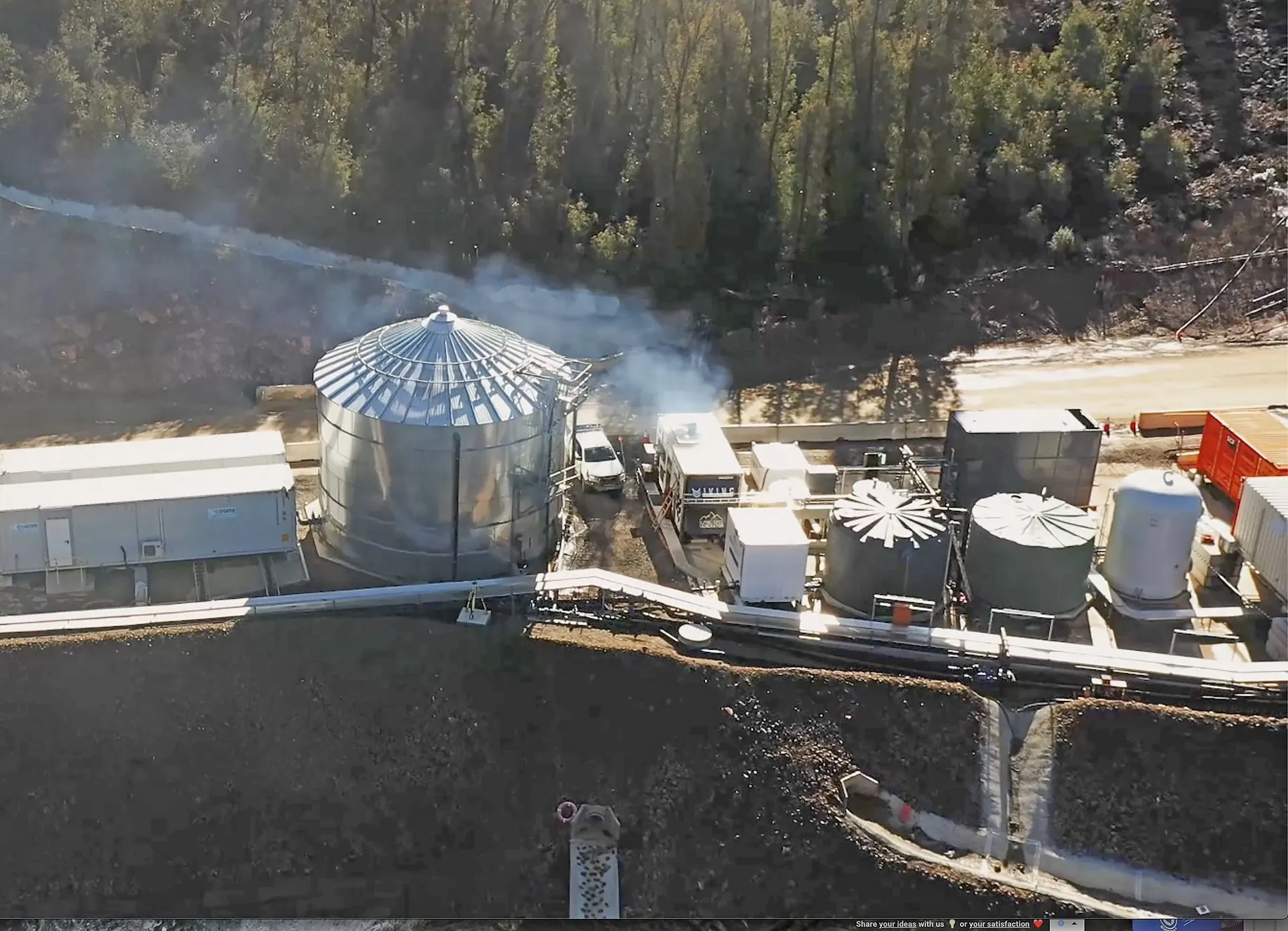
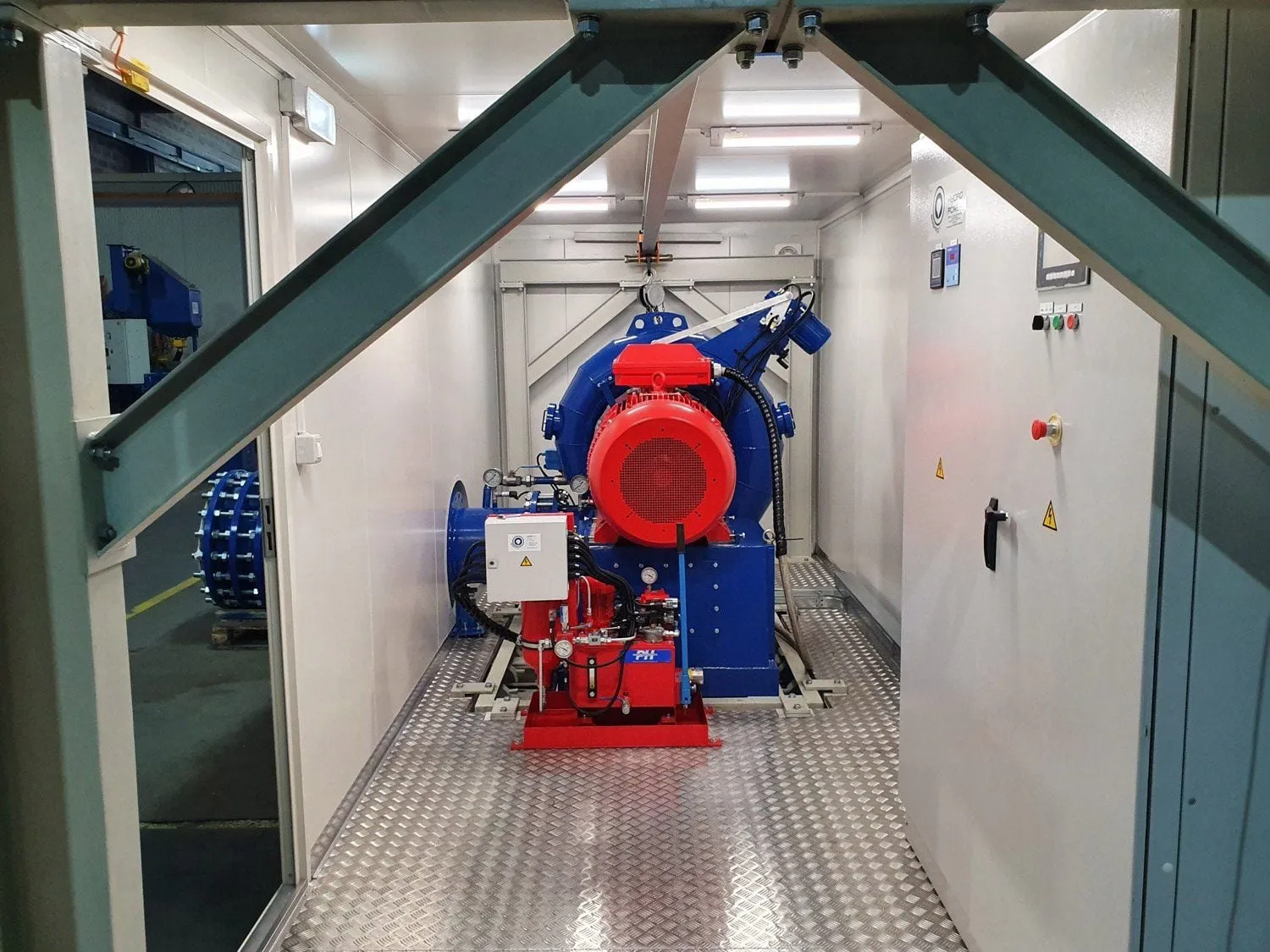
We design and build mini hydro power plants and small hydro power plants as engineered turnkey packages. Each plant combines the turbine, generator and automated controls needed to run unattended. Plants come in containerised, modular or fixed configurations to suit the site, head and available flow. We build and test containerised and modular units in our workshop, so they arrive ready to connect. Because we also design the pumping and water systems around them, we engineer each module to fit the infrastructure it draws from.
Where hydro power modules fit
A hydro power module recovers energy from water that's already moving through your infrastructure, so it fits best where flow and pressure are going unused.
Water supply and transfer schemes
Where pressure is currently burned off across valves.
Gravity mains
Where water falls from a higher storage to a lower one.
Existing dams and irrigation canals
Where outlets and drops can drive a turbine.
Mining facilities
Where mine water systems move large volumes downhill.
Remote locations
Sites that rely on diesel generation or a long grid extension.
In each case the question is the same: how much flow and how much head does the site have, and how steadily? That decides whether a mini or small hydro power plant makes sense. We assess your existing water infrastructure, available flow and operating conditions first, then design a module to suit.
Micro, mini or small hydro?
Hydro is usually grouped by how much power a plant can generate, though definitions vary by country and organisation.
- Up to around 100 kW
Micro hydro
A micro hydro turbine at this size typically serves a single property or a small site.
- Around 100 kW to 1 MW
Mini hydro
Suits larger sites and water infrastructure with steady flow.
- Around 1 MW to roughly 10 MW
Small hydro
A small hydro power plant supplies a larger operation or feeds the network.
These are typical ranges, not fixed rules.
The label matters less than the kind of project. Imported micro hydro power generator kits are made for homes and off-grid properties. Engineered plants are for water and industrial infrastructure, where the plant has to be designed around existing pipelines, dam outlets or mine water systems, built to suit the site and integrated with the pumping and controls around it. That's the work we do, and it starts with your water, not a catalogue.
Designing a hydro power module
A hydro power design starts with two numbers: the flow available and the head between the intake and the turbine. Together with how those numbers change through the year, they set the turbine type, its orientation, the generator and the expected annual output. From there, we design the intake, penstock or pipeline connection, tailrace and control system, and package the plant in the configuration that suits the site.
Hydro power modules are part of the wider water management systems we design for mining, industry and water authorities, alongside pumping, treatment and dosing plants. The full range is on our water management systems page, and the pumping packages that often sit upstream of a hydro module are on our mining pumps page.
Turbine selection
The right turbine depends on your head and flow. As a general guide, high head with lower flow suits an impulse turbine such as a Pelton, medium head and flow suits a Francis, and low head with high flow suits a Kaplan or propeller type. The turbine can be arranged horizontally or vertically to suit the site. Where flow varies a lot through the year, a plant with more than one turbine can keep running efficiently across the range, instead of sizing a single machine for one condition.
Grid-connected or off-grid
A grid-connected plant can export surplus power, but that needs a connection agreement with your local network and the relevant approvals, so it's worth starting that conversation early. An off-grid plant supports energy independence at remote sites and can run alongside solar, batteries or diesel generation. We'll help you work out which suits your site and what it would take to get there.
Controls and remote monitoring
A hydro module is designed to run automatically, with protection built in to look after the plant. Remote monitoring lets you see how it's performing without someone on site, which suits unattended and remote locations. Tell us how your site operates, and we'll design the controls to fit.
Features and benefits
Features
- Fully turnkey engineered solutions with turbines and generators
- Horizontal or vertical designs
- Containerised solutions available
- Modular or fixed plants
- Complete automated operation and control systems
- Remote monitoring for unattended sites
- High-quality steel and casing for long life expectancy
Benefits
- Energy recovered from existing water infrastructure
- Infrastructure development in remote locations
- Modular units customised for optimum efficiency
- Fully automated operation, ideal for remote sites
- Grid-connected or off-grid operation
- Low operational costs
Frequently asked questions
What is a mini or small hydro power plant?
A mini or small hydro power plant uses flowing water to turn a turbine and generate electricity. Mini hydro power plants are usually around 100 kW to 1 MW, and small hydro from about 1 MW to 10 MW, though definitions vary. Ours are engineered for existing water infrastructure, such as pipelines, dam outlets and mine water systems.
How efficient are your hydro power modules?
It depends on the turbine type, your head and flow, and how the plant is designed. We confirm turbine and plant efficiency for your site at the design stage.
Can a hydro power module be containerised?
Yes. Modules are available containerised, modular or as fixed plants, in horizontal or vertical arrangements. Which suits you depends on your site and how quickly you need it running.
What happens to power the site does not use?
Surplus power can be exported to the grid, but that needs a connection agreement with your local network and the relevant approvals. An off-grid plant can instead run alongside solar, batteries or diesel. We'll help you work out which suits your site.
What head and flow do I need?
You need both, and the more of either, the more power you can generate. How much is enough depends on your site and how steady the flow is through the year, so tell us what you have and we'll assess it.
How much power can my site generate?
As a rough guide, power in kW is about 9.81 × flow (m³/s) × head (m) × efficiency. For example, 0.5 m³/s at 20 m head with 80% efficiency gives roughly 78 kW. That's an illustration only, and we confirm the designed output for your site at the design stage.
Talk to us about hydro power modules.
Design, supply, install and commissioning delivered as one turnkey package, built to Australian and International Standards. Send us the duty, the site and the timeline, and we'll come back with a proposal.
- Tell us about the job
The site, the application and anything you already have, such as drawings, a protocol or a duty point.
- Our engineering team responds
A member of our engineering team will respond within 24 hours.
- Proposal and concept
A free proposal and concept design, with no obligation.