LV truck wheel wash & undercarriage wash systems
Whether it's a council, EPA or biosecurity condition at your site exit, or maintenance delays and hand hosing on a wet pad in the workshop, mud is worth solving properly. A truck wheel wash stops mud leaving site on your tyres, and an undercarriage wash and demucking system removes it from the chassis, wheel arches and running gear.
We supply high-quality MobyDick systems from Frutiger, and we engineer, install and commission each one with you, so it suits your vehicles, your site and the water you have to work with. From a drive-through wheel wash at a construction site gate to a demucking system for mining and earthmoving machinery, we’ll help you find the right fit and stay with you once it’s running.
Wheel wash or undercarriage wash: which do you need?
They're often confused, but they do different jobs. A wheel wash cleans tyres and wheels as vehicles leave, to stop mud being tracked onto public roads. An undercarriage wash and demucking system cleans the parts a wheel wash doesn't reach, such as the chassis, wheel arches, mudguards and running gear.
| System | Truck wheel wash | Undercarriage wash and demucking system |
|---|---|---|
| What it cleans | Tyres and wheels | Chassis, wheel arches, mudguards and running gear |
| Typical trigger | Track-out conditions at the site exit | Heavy mud build-up, workshop delays and hand hosing |
| Cycle time | Seconds per vehicle | Around 5 minutes for a light vehicle, 8 to 10 for medium and heavy |
| Vehicles suited | Trucks and other wheeled vehicles | Light, medium and heavy vehicles, wheeled and tracked |
| Where it sits on site | Site exit | Before the workshop or site exit |
Many sites need both. A demucking system takes heavy mud off the chassis and running gear, and a wheel wash then catches what's left on the tyres at the gate. We specify them together, planning the layout, throughput and water recycling as one system so vehicles keep moving. Not sure where to start? Tell us what's leaving your site and what's reaching your workshop, and we'll help you work out the right mix.
Fixed or portable wheel wash: how to choose
Both clean tyres and wheels in the same way. The choice comes down to how long you'll be on site and what your site allows. A fixed wheel wash suits long-term sites such as quarries, mines and permanent depots, where it sits at a regular exit. A portable wheel wash system, or mobile truck wheel wash, suits project-length sites and places where civil works aren't possible, because it's built to move with the job.
| Wheel wash | Fixed | Portable |
|---|---|---|
| Our systems | ConLine KIT Flex 400B and 800B | ConLine KIT Flex 400MB, 400MC, 800MB and 800MC |
| Throughput | Up to 150 moderately soiled trucks a day (400B), up to 200 (800B) | Up to 100 a day (400MB, 400MC), up to 150 (800MB, 800MC) |
| Water recycling | 20 m³ recycling tank, buried or above ground (800B has two) | 20 m³ recycling tank (800 models have two); scraper conveyor on the MC models for sediment removal |
| Installation | Planned with the civil works for your site | Entry and exit ramps reduce or remove civil works |
| Relocation | Possible, but needs planning around site conditions | Designed to be moved between sites |
| Best for | Long-term sites and busy exits | Temporary projects, and sites where civil works aren't possible |
Not sure which suits? Tell us how long you'll be on site and what's possible at your gate, and we'll help you decide.
Which system suits your site
Start with your fleet. Light vehicles (LV), medium vehicles (MV) and heavy vehicles (HV) need different capacity, and tracked plant needs a platform it can drive onto. Then consider your soil type, the heaviest axle load you run and how many vehicles need washing at your busiest times. Sticky clay and wet mud call for more intensive washing than dry dirt. Our standard systems are rated to a 15 t axle load, and the MobyDick ONE is available up to 50 t. Share these details and we'll recommend a system, then size it to your throughput.
Undercarriage wash and demucking systems
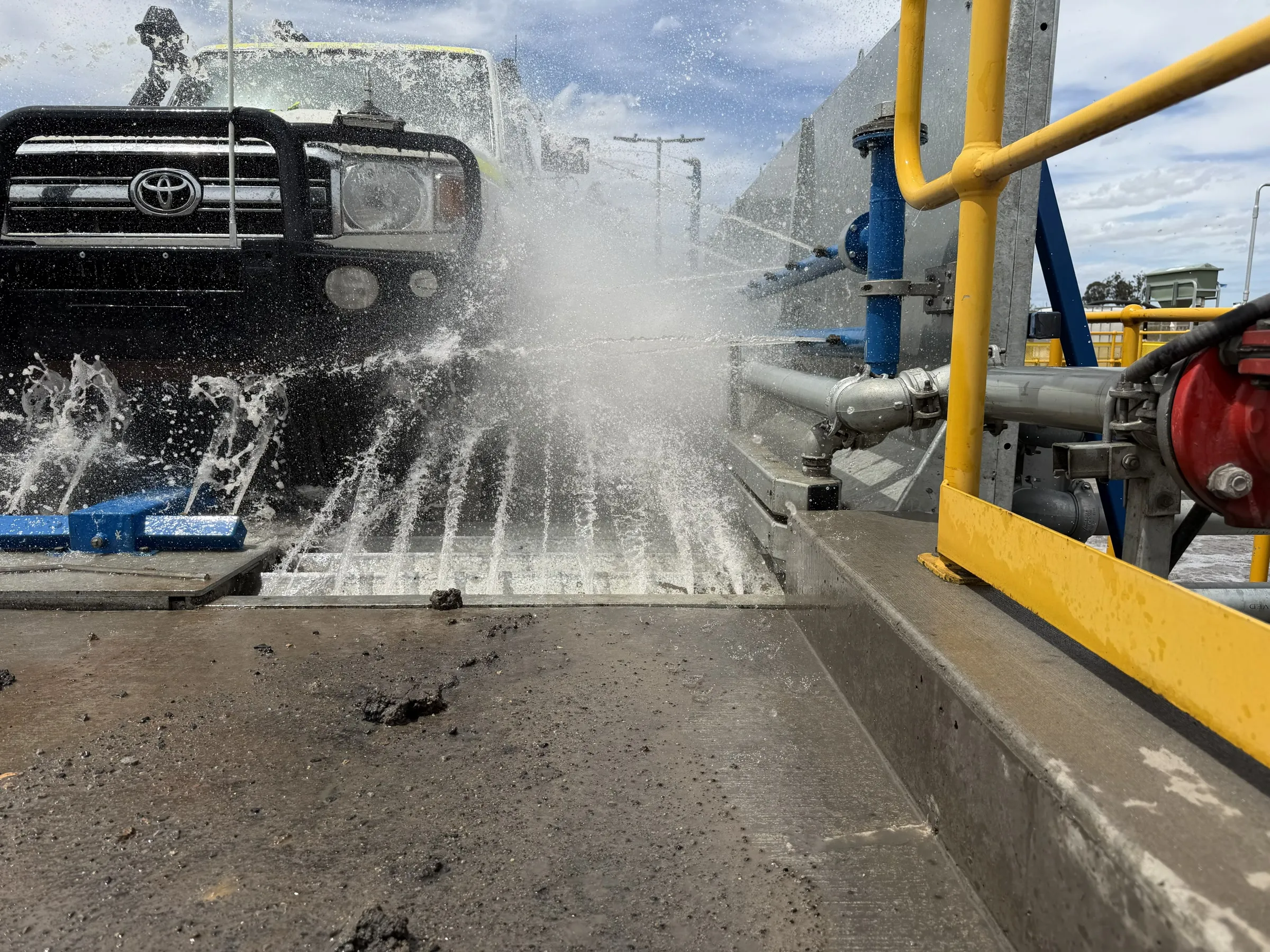
A demucking system cleans mud from the parts of a vehicle you can't easily reach with a hose: the chassis, wheel arches, mudguards and running gear. The vehicle drives through slowly with the operator staying in the cab, and the wash does the work.
Here's how it works. Oscillating side nozzle bars sweep along the vehicle, while angled bottom nozzles wash up into the mudguards. Inclined track profiles increase the milling action on treads, and tracked vehicles can drive straight onto the platform. A fresh water rinse then removes what's left, and an extended drip pad lets water drain before the vehicle drives on.
Light vehicle demucking for mine sites
Light vehicles pick up mud fast, and hand hosing on a wet pad is slow and messy. A five-minute demucking vehicle cycle handles up to 20 light vehicles an hour and replaces hand hosing on wet pads. At one coal mine site, our closed-loop system washes heavily soiled light vehicles with the operator still in the machine, then gives them a fresh water rinse as they cross a drip tray.
Medium, heavy and tracked plant
For wheeled and tracked vehicles, the HD1 suits small and medium vehicles and the HD2 extends to large ones, both providing automatic primary cleaning. Where throughput is high, the MobyONE can wash up to 250 heavily soiled trucks a day, and haul fleets can be served by parallel lines, as at a coal mine facility with three. Plant hire companies use demucking to turn equipment around faster, cleaning machines in minutes rather than hours.
Wash water is collected and recycled through a recycling tank, and the solids that settle out are removed in a way that suits your site. Demucking suits mine sites, construction fleets and plant hire yards, where mud is heavy and vehicles can't wait around for hand washing. We'll match the layout and options to your vehicles and to how your site handles the mud.
What you need to build before installation
Plan your site works early, because they often set the timeline. A wheel wash needs a slab or pit for the unit, drainage for wash water, and power and water connections. Footprints differ too: a fixed wheel wash is typically 4 m or 8 m long, while a demucking platform can run up to 20 m. Check your power requirements early, including whether you need three-phase supply, and whether your site or council requires approvals. Portable units with entry and exit ramps can reduce civil works. We'll walk you through it and plan the installation around your site.
Features and benefits
Features
- Drive-through wash units from 330 cm to 800 cm long
- Maximum axle load of 15.0 t across the standard range
- Floor and side nozzle arrays for a full wheel and chassis wash in one rotation
- Closed-loop recycling tank, buried or above ground
- Optional scraper conveyor for automatic sediment removal
- Entry and exit ramps for relocatable installations with reduced civils
- Vehicle detection sensor and adjustable wash timer
- Sound emission below 75 dB
Benefits
- Mud and dust kept off public roads
- Water reused in a closed circuit
- Installation measured in hours on compact units
- Relocatable systems for temporary projects
- No operator required for the wash cycle
- Low maintenance hot-dip galvanised construction
Truck wheel wash models and specifications
| Model | Type | Drive-through length | Nozzles | Recycling tank | Trucks per day |
|---|---|---|---|---|---|
| ConLine KIT Flex 400B | Permanent | 400 cm | 130 | 20 m³ | Up to 150 (moderately soiled) |
| ConLine KIT Flex 800B | Permanent | 800 cm | 2 x 130 | 2 x 20 m³ | Up to 200 (moderately soiled) |
| ConLine KIT Flex 400MB / 400MC | Relocatable | 400 cm | 130 | 20 m³ | Up to 100 (moderately soiled) |
| ConLine KIT Flex 800MB / 800MC | Relocatable | 800 cm | 260 | 2 x 20 m³ | Up to 150 (moderately soiled) |
| Dragon C | Permanent or mobile | 330 cm | 70 + 38 backwash | 3.4 m³ integrated | Up to 100 (lightly soiled) |
| Wash Buddy A | Permanent | 360 cm | 104 | Steel tank or customer settling basin | 100 to 200 (moderately soiled) depending on settling basin size |
Delivered projects
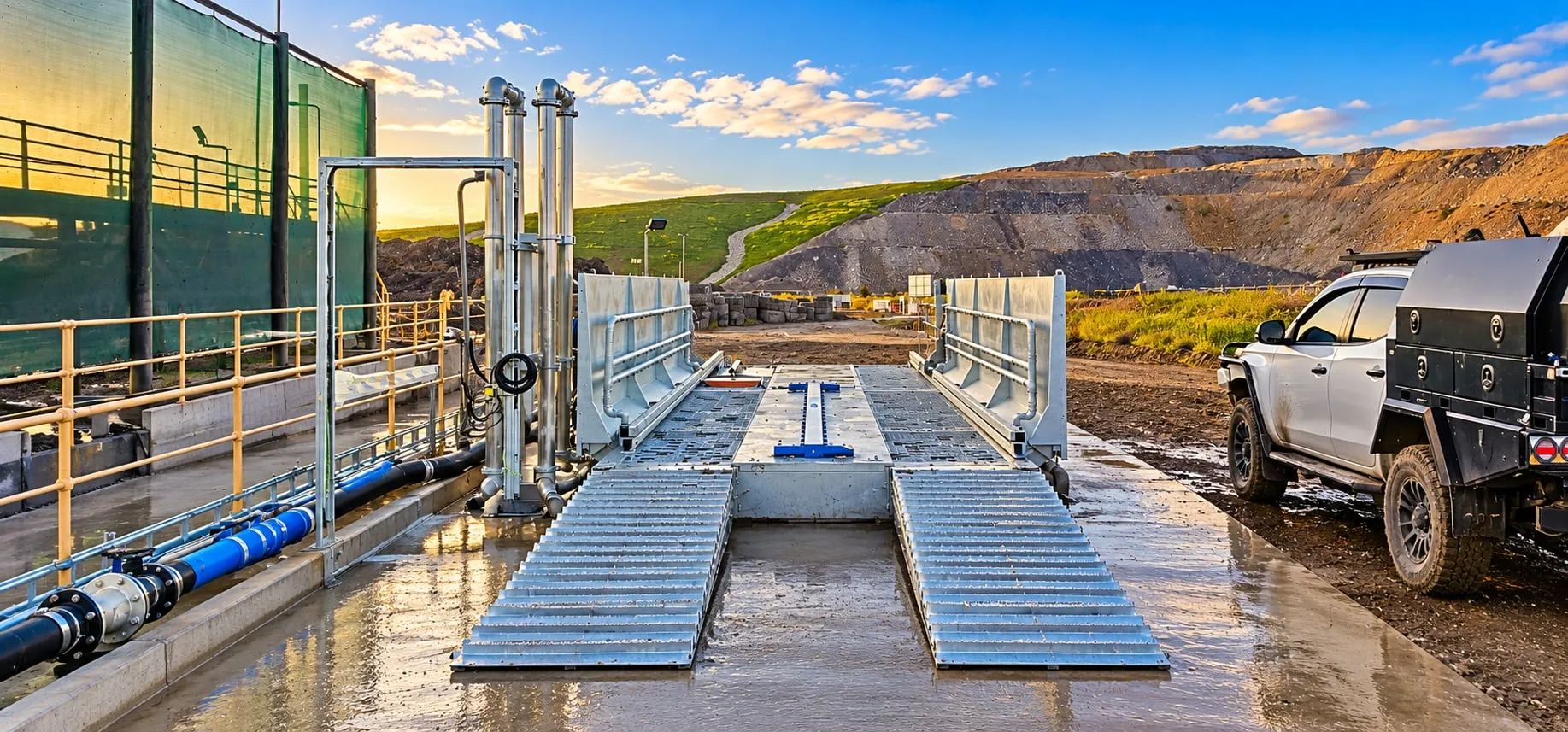
Maules Creek LV Demucking System
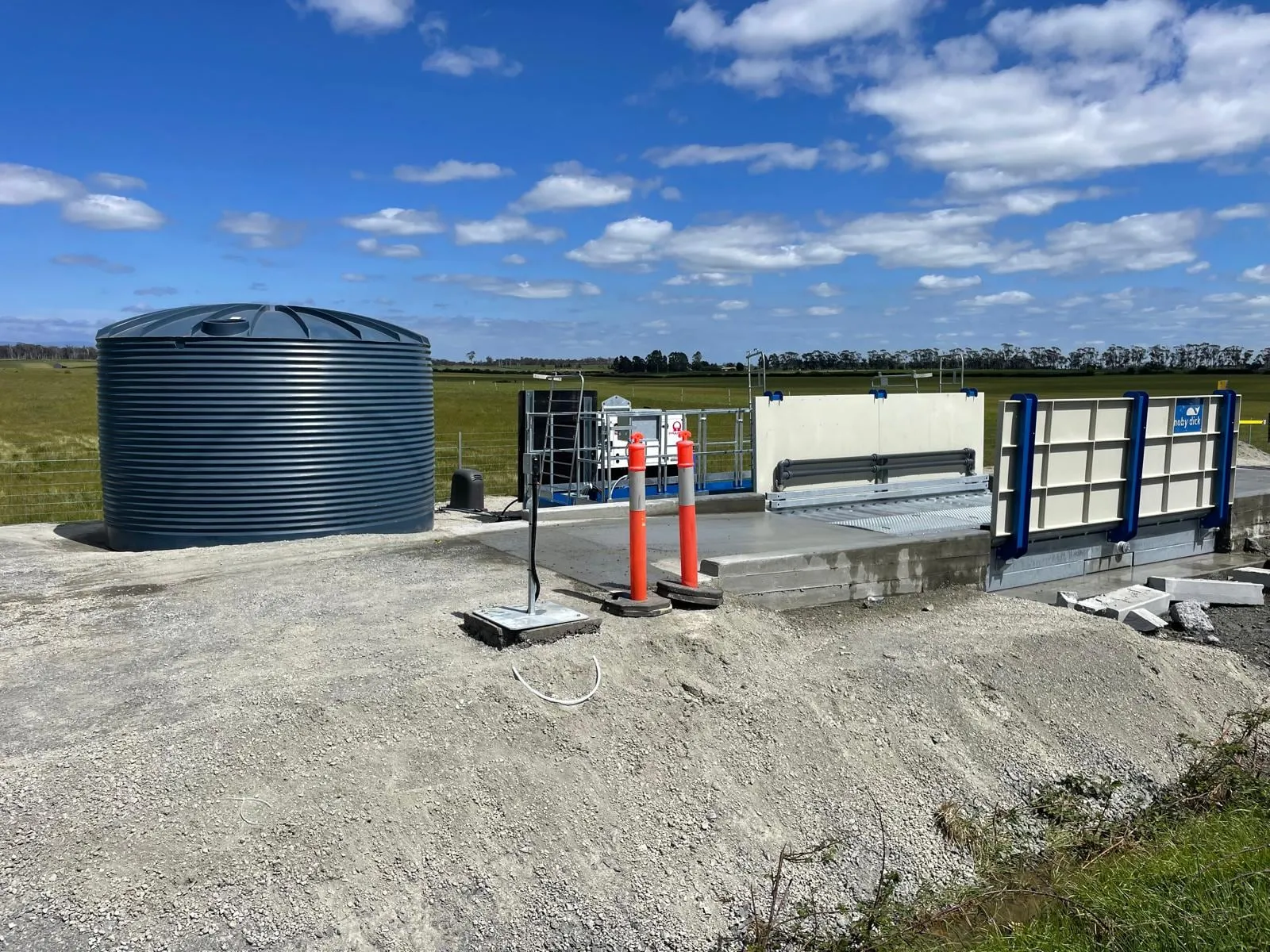
Tasmania Biosecurity Vehicle Wash
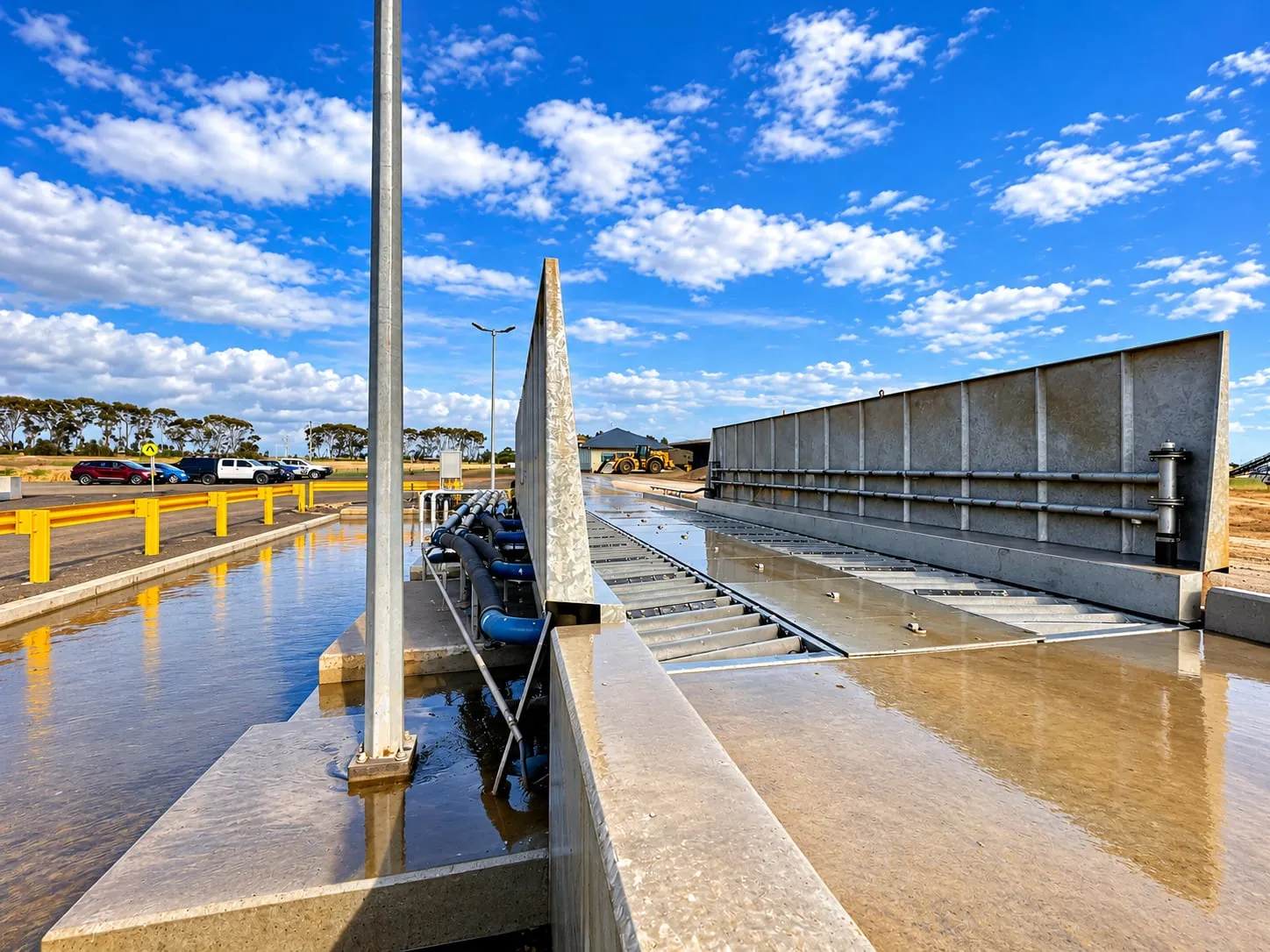
Ballarat Vehicle Wash System
Frequently asked questions
What does a truck wheel wash system cost, and what drives the price?
There's no standard price, because the right solution is shaped by your site. Cost depends on the size and number of units, how many vehicles you wash and how soiled they are, whether you need a fixed or portable system, and site works such as civil, power and water connections. Tell us about your site and we'll work through it with you.
What is a demucking system?
It's a heavy-duty drive-through wash system that removes heavy mud from the chassis, wheel arches, mudguards and running gear of wheeled and tracked vehicles, using nozzles and a fresh water rinse. Wash water is collected and recycled through a tank.
How long does a wash cycle take?
A wheel wash takes seconds per vehicle. A demucking cycle takes around 5 minutes for a light vehicle and 8 to 10 minutes for medium and heavy vehicles.
What civil works do I need before installation?
Usually a slab or pit, drainage for wash water, and power and water connections. Portable units with entry and exit ramps can reduce or remove civil works. We'll plan this with you early.
Does the silt carried past the unit make track-out worse?
Silt ends up in the wash water, where it settles in the recycling tank. Settled solids need removing regularly, by excavator, vacuum truck or scraper conveyor depending on the system. If sediment builds up, washing becomes less effective, so we plan its removal with you.
Does it need three-phase power or compressed air?
It depends on the system and how many pumps it has. The MobyDick ONE, for example, draws 5.5 kW per pump. We confirm the electrical supply you need, including three-phase, and any compressed air, during design.
What do LV, MV and HV mean?
Light, medium and heavy vehicles. The size and weight of your vehicles affects the capacity and platform you need, so tell us what you run and we'll match the system to it.
Talk to us about LV truck wheel wash and undercarriage wash systems.
Design, supply, install and commissioning delivered as one turnkey package, built to Australian and International Standards. Send us the duty, the site and the timeline, and we'll come back with a proposal.
- Tell us about the job
The site, the application and anything you already have, such as drawings, a protocol or a duty point.
- Our engineering team responds
A member of our engineering team will respond within 24 hours.
- Proposal and concept
A free proposal and concept design, with no obligation.